Virtual Dance Collection® (VDC)
Platform / Systems-Based Research
Research domain: Dance studies, media systems, public scholarship, pedagogy
Project type: Longitudinal, practice-based research infrastructure
Role: Founding media and systems lead; designer, media director, and media curriculum architect
Duration: 2016–present
Context: Statewide public archive, educational platform, and multimedia presenations
Practice as Research
The Virtual Dance Collection® (VDC) is a longitudinal research project that investigates how digital systems can preserve, activate, and teach dance as embodied knowledge. From its earliest fieldwork through its current statewide deployment, I have served as a continuous lead for the design, management, and public presentation of the project’s media systems. Rather than treating archives as static repositories, the VDC functions as a dynamic research infrastructure that integrates oral history, media documentation, interactive interfaces, and curriculum design to support movement-based scholarship across public, educational, and community contexts.
The core research inquiry asks: How can digital platforms support the transmission of dance history in ways that foreground embodiment, cultural context, and lived experience, while remaining accessible to diverse audiences? The project positions archival systems not as neutral containers but as active mediators that shape how dance knowledge is encountered, navigated, and embodied by users.
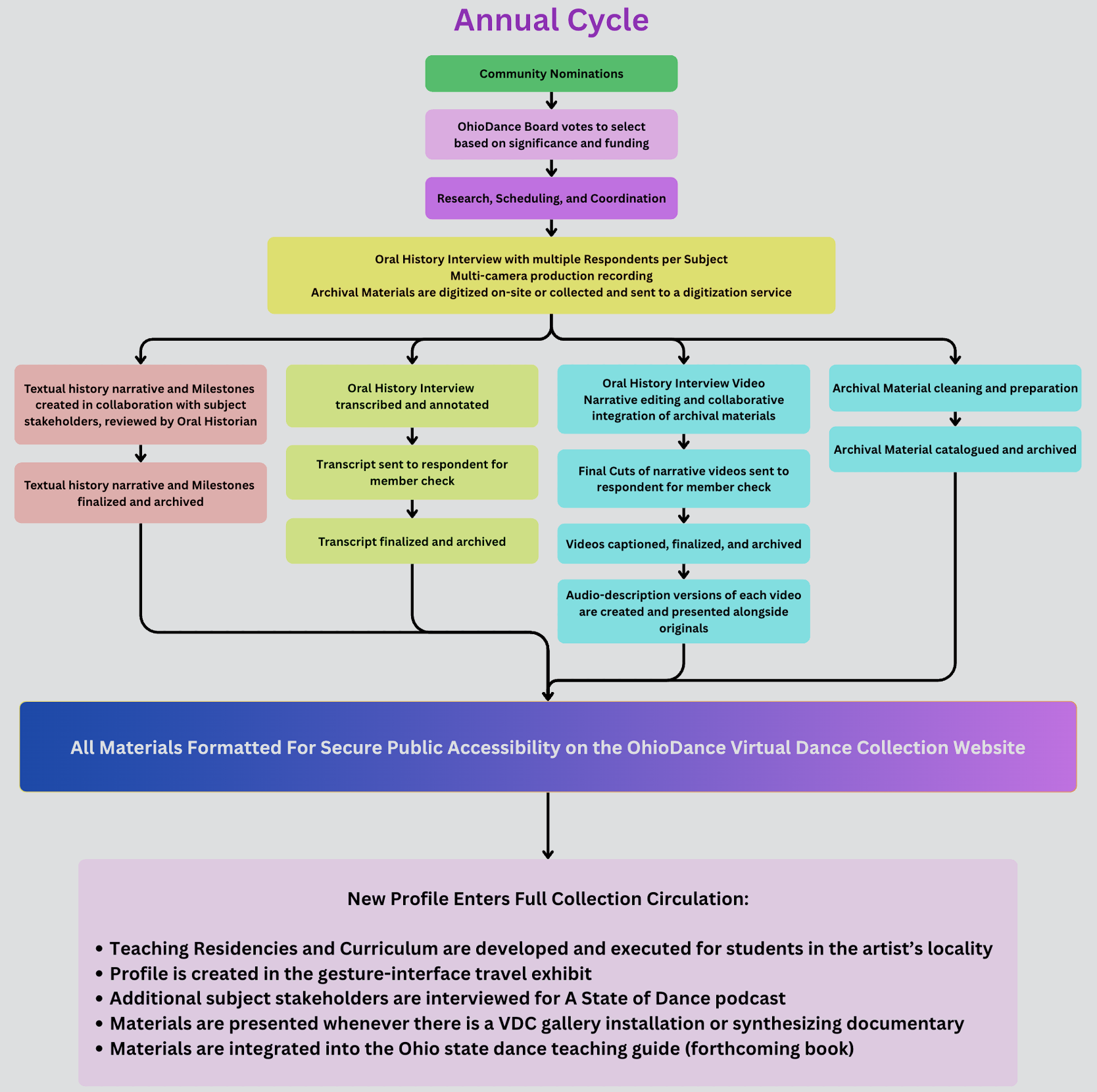
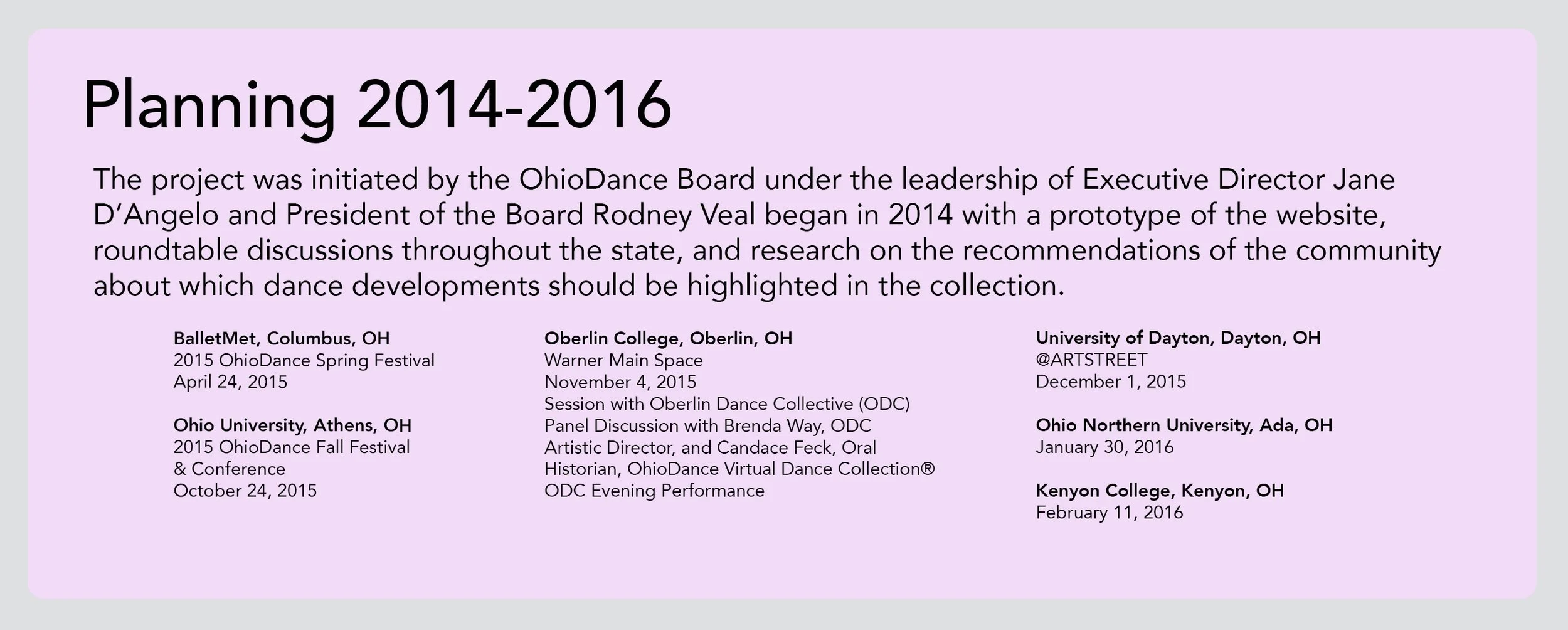
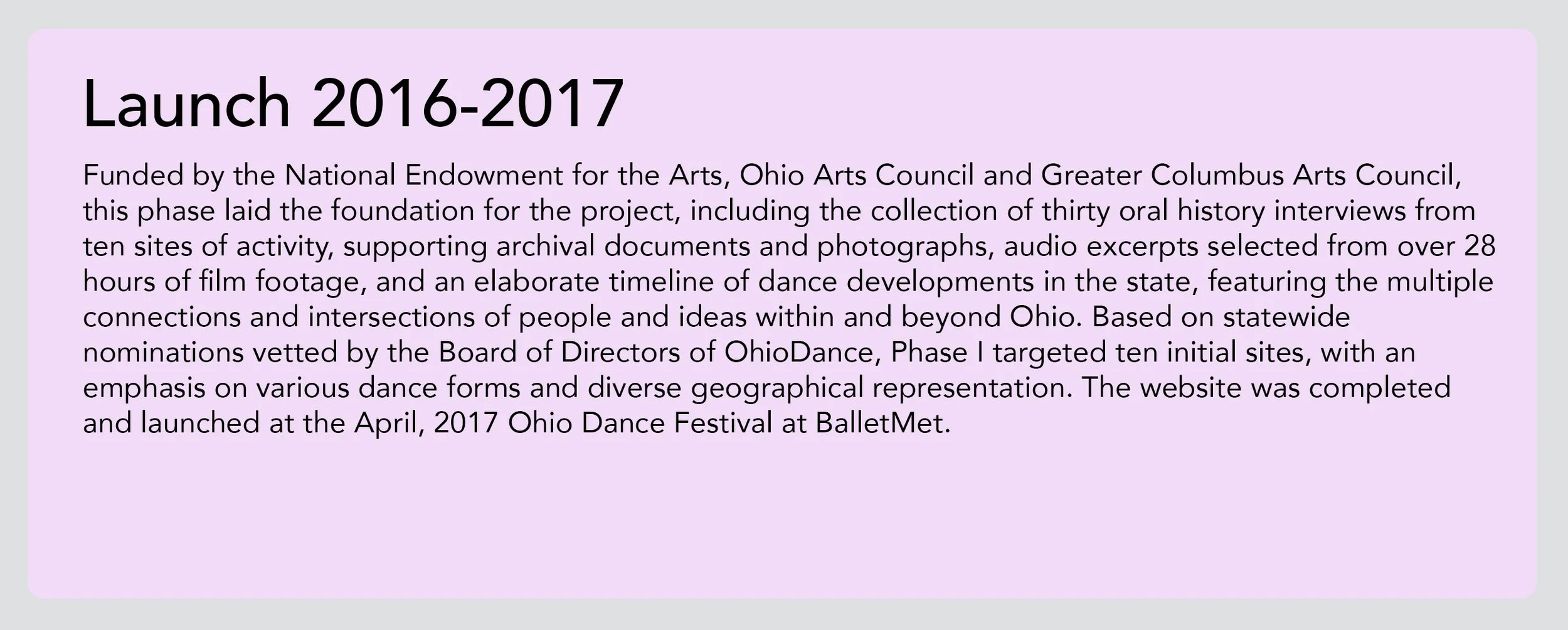
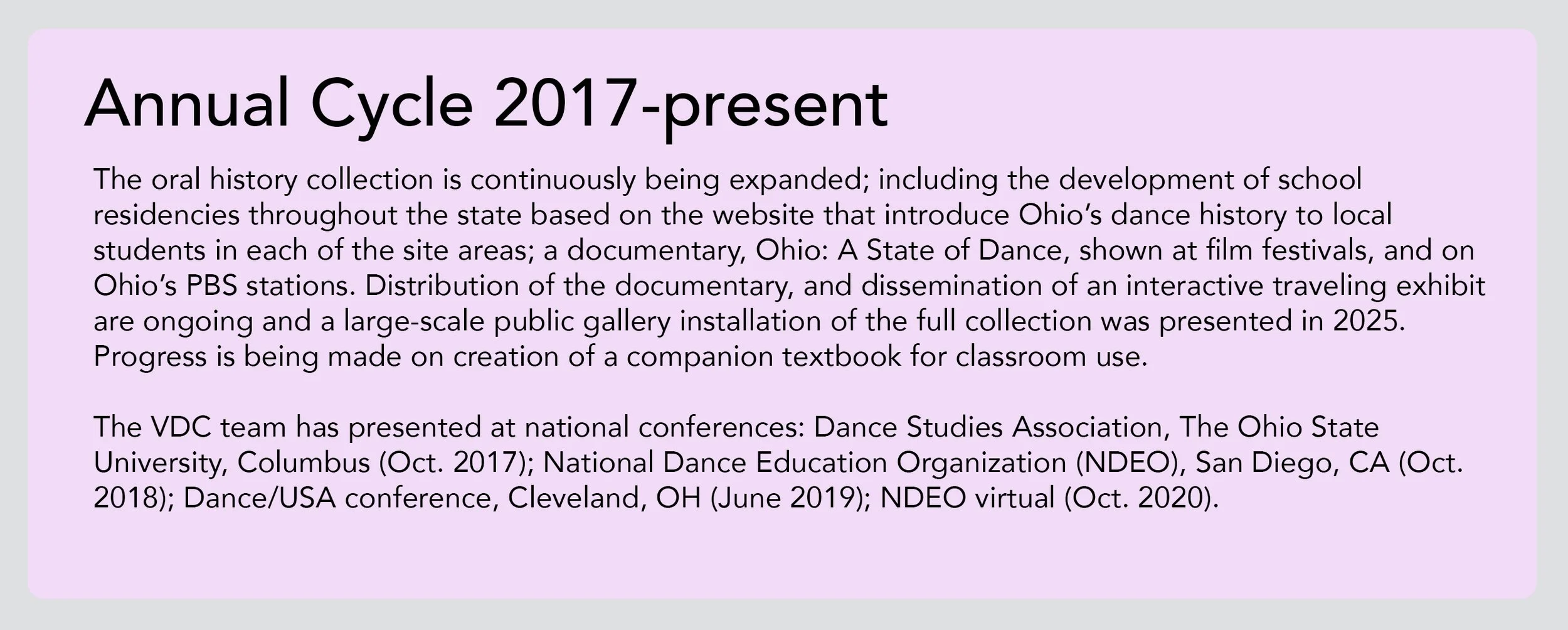
Virtual Dance Collection annual cycle, in practice without interruption since 2016.
The collection contains 47 profiles of historically significant Ohio individuals, organizations, and institutions as of 2025, with 5 new profiles currently underway.
Methods
The VDC employs a systems-based, practice-led methodology that integrates archival research, media production, interaction design, and pedagogy.
Oral History as Primary Research
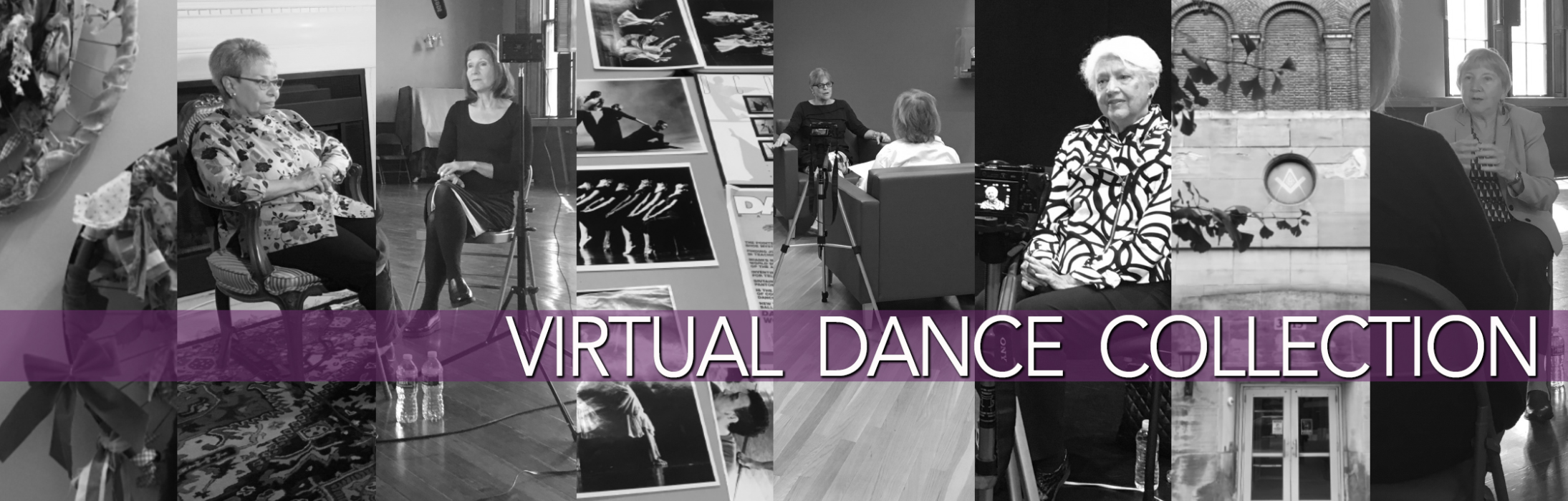
Long-form historical interviews with dancers, choreographers, and cultural leaders function as foundational research materials, foregrounding embodied memory and experiential knowledge.
Archival Design & Metadata Systems
Archival assets are structured through intentional metadata schemas and thematic organization that support scholarly inquiry, public browsing, and educational use.
Media Documentation & Preservation
Archival materials are collected and digitized in addition to contemporary documentation through video, photography, and narrative media, balancing historical preservation with contemporary media standards.
Interactive Systems & Embodied Interfaces
The archive is activated through an interactive web, enabling users to engage with materials through embodied interaction rather than purely text search. This deployment informed the design of subsequent platforms, including documentary film, podcast series, large-scale installations, and touring interactive systems, allowing the research to circulate across multiple media forms while remaining grounded in a shared archival base.
Curriculum & Pedagogical Integration
Research outputs are translated into modular curricula for K–12 and higher education, embedding archival research into classroom practice.
Iterative Public Deployment
The system is continually tested and refined through public exhibitions, touring interactive installations, and educational residencies.
Research Outputs & Outcomes
Interactive Digital Archive
Public-facing platform providing access to historical interviews, media documentation, and curated dance history content.
Touring Interactive Exhibit
Transportable, offline installation enabling embodied navigation of the archive in schools, libraries, and public spaces statewide.
Large-Scale Gallery Installations
Museum-scale exhibitions translating archival research into spatial, interactive environments.
Curriculum & Educational Residencies
Statewide implementation of dance-history curricula and multi-day residencies across K–12 and university contexts.
Scholarly & Public Dissemination
Conference presentations, panels, workshops, and public programs engaging educators, artists, and researchers.
Research Infrastructure Statement
The Virtual Dance Collection® operates as a form of research infrastructure, supporting sustained inquiry across time rather than a single output. By integrating archival design, media systems, interactive technologies, and pedagogy, the project enables ongoing research, teaching, and public engagement with dance as embodied cultural knowledge.
This infrastructure-based approach expands models of dance scholarship beyond publication-centered paradigms, demonstrating how digital platforms can function simultaneously as archives, research environments, and educational tools.
Relevance to Dance & Media Education
The VDC models how movement-based research can be embedded within digital systems that are scalable, accessible, and pedagogically grounded. It provides a framework for teaching dance history through interactive media, supports interdisciplinary collaboration across dance and technology, and offers a replicable model for community-engaged research in the performing arts.