Embodied Interaction & Systems-Based Research
Mid-Air Gesture Interface Traveling VDC Exhibit
Research domain: Interactive media, embodied interface design, dance archives
Project type: Touring, offline interactive system
Role: Sole system conceiver and lead designer; interface development, software programming, and hardware configuration
Duration: 2020–present
Context: Schools, universities, libraries, galleries, public events
Practice as Research
The Mid-Air Gesture Interface Traveling Exhibit is a systems-based research project that investigates how embodied interaction can function as a primary mode of access to dance archives. Developed in response to the need for a transportable version of the Virtual Dance Collection®, the exhibit was fully conceived, designed, and implemented as a standalone system, from interaction logic and software architecture to physical configuration and public deployment. The project asks: How can mid-air gesture replace conventional screen-based navigation to support intuitive, bodily engagement with movement-based knowledge in public and educational contexts?
The research responds to the limitations of traditional archival interfaces, which often rely on keyboards, mice, and textual search—tools that can feel misaligned with the embodied nature of dance. By designing an interface navigated through hand and arm movement, the project positions physical gesture as a form of inquiry, aligning the act of accessing dance history with the kinesthetic intelligence of the body.
Methods
This project employs a practice-based methodology integrating interaction design, hardware systems, and pedagogical testing.
Embodied Interface Design
Navigation of archival materials is achieved through mid-air hand gestures, treating bodily movement as the primary interface and gesture as a mode of inquiry. Gesture vocabulary was developed to be intuitive, accessible, and legible across age groups and abilities.
Offline, Transportable System Architecture
The system was designed to function without internet access, enabling deployment in schools, libraries, and community spaces with limited infrastructure. Custom hardware configuration supports reliability, portability, and ease of installation.
Archive Integration
The full Virtual Dance Collection® archive is accessible through the interface, allowing users to browse historical interviews, media documentation, and curated content through embodied interaction rather than text-based search alone.
Iterative Public Testing
The interface was refined through repeated public deployments, observing how users of different ages and backgrounds interacted with the system and adjusting gesture logic, responsiveness, and visual feedback accordingly.
Pedagogical Application
The exhibit was designed for facilitated and self-directed use, supporting classroom instruction, guided tours, and exploratory learning in both formal and informal educational settings.
Research Outputs & Outcomes
Touring Interactive Exhibit
Installed at K–12 schools, universities, libraries, galleries, and public events, enabling embodied engagement with dance history across diverse contexts.
Educational Integration
Used as a teaching tool within dance history, media literacy, and arts education curricula, supporting inquiry-based learning through physical interaction.
Public Access to Archives
Expanded access to dance archival materials beyond web-based platforms, particularly in communities without consistent internet access.
Scalable Interaction Model
Demonstrated a replicable framework for gesture-based archival interaction applicable to other movement-based or embodied knowledge systems.
Research Infrastructure Statement
The Mid-Air Gesture Interface Traveling Exhibit functions as embodied interaction research infrastructure, translating archival access into a bodily experience. Rather than treating interface design as a neutral layer, the project positions interaction itself as a site of research, shaping how users understand, navigate, and relate to dance history.
By foregrounding gesture as an epistemological tool, the project contributes to broader conversations in dance and media studies about embodiment, accessibility, and the role of technology in preserving and transmitting movement-based knowledge.

public users interact with the exhibit
Relationship to the Virtual Dance Collection®
This project operates as an activation layer within the broader Virtual Dance Collection® ecosystem, extending the archive into physical space and enabling embodied engagement beyond the web. It complements the digital archive, curricula, and gallery installations by offering a portable, interaction-focused research environment.
Why This Matters
This research demonstrates how interactive systems can align technological design with the embodied nature of dance, offering alternative models for archival access, pedagogy, and public scholarship. It provides a case study in how movement, technology, and education can converge through thoughtfully designed interfaces that prioritize bodily intelligence.
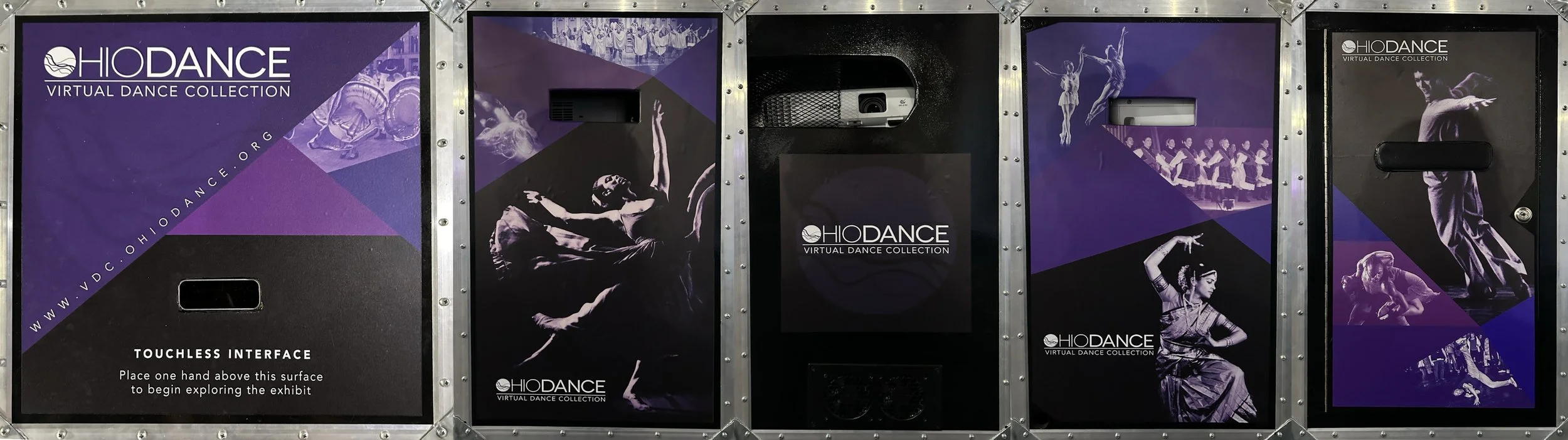
Exhibit case + wrap design, featuring archival images from the collection, selected to offer diversity of geographic and genre representation. The unit is fully self-contained with a single external power cable. Functions off-line, records user interaction data, and operates continuously with minimal setup and maintenance interventions required.