Practice-Based Research in Screendance
Representative works from a longitudinal inquiry across camera-based, motion-capture, animation, and mixed-reality screendance.
Danse Macabre (2016) and paramenoume (we remain) (2025)
Danse Macabre (2016)
Lead Artist, Co-Director, Choreographer, Motion Capture Performance
paramenoume (we remain) (2025)
Director of Photography
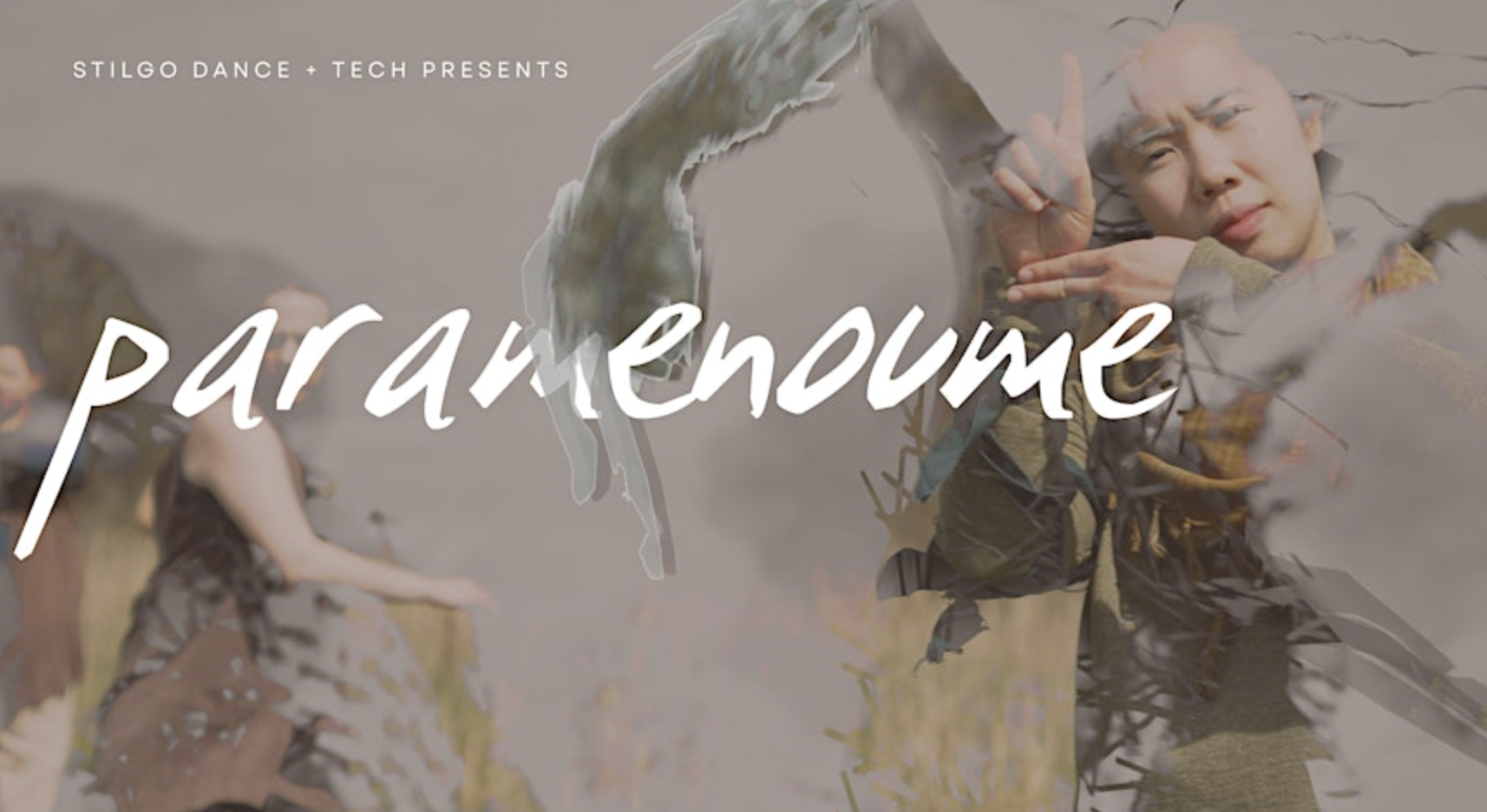
Premiere screening December 12, 2025. The film is entering festival circulation and additional screenings are forthcoming.
Password access found here: paramenoume (we remain)
paramenoume (we remain) is a mixed reality dance film that offers a queer counter-narrative to the mythology of the sirens. The work reclaims and retells from the misunderstood (and oft-mistranslated) creatures point of view, suggesting the sirens honeyed words, sharp talons, and sharper tongues are not in service of gratuitous violence but in defense of a queer matriarchal utopia. By decentering the invader from the classic tale, the film uses movement, text, and creative visualizations to redefine their relationship to the outsider, each other, and themselves. It is a reclamation, an inside peak, and an allegory for the fight, safety, prosperity of queer/trans/femme communities. In the words of scholar Jeffrey Jerome Cohen, "The monster dwells at the gates of difference [...] the monster polices the borders of the possible" and the creatures of paramenoume attempt to bathe luxuriously and fiercely in that liminal space.
Practice as Research
These works examine screendance as a site of practice-based research, investigating how digital mediation reshapes embodiment and viewer perception across evolving technological contexts. Developed through a broader practice spanning cinematic, documentary, archival, and motion capture based projects, the research is represented here by two anchor works—Danse Macabre (2016) and paramenoume (we remain) (2025)—which frame a longer-term inquiry into collaborative and mediated authorship, embodiment, and meaning in screen-based contexts.
Danse Macabre is a 3D animated motion-capture screendance developed through an international collaboration initiated by Franck Boulègue and Marisa C. Hayes for the International Screendance Festival of Burgundy. Commissioned as a contribution to a larger omnibus film, the work was conceived and produced by me as both a standalone screendance and a component within the collective project. The piece explores themes of mortality, inevitability, and escape by translating embodied movement into animated form.
As lead artist and co-director, I guided the project’s conceptual framework and research direction, investigating how motion capture disrupts traditional choreographic authorship by producing hybrid bodies that exist between human performance and digital abstraction. I served as both choreographer and motion-capture performer, situating embodied authorship at the center of the project’s inquiry. I collaborated closely with animation co-director Thomas Heban, sharing directorial authorship of animation-specific visual and technical decisions. The work foregrounds questions of temporality and mediation, examining how animation alters the expressive capacity and perceptual framing of danced movement. The project circulated internationally through film festivals, curated educational programs, and broadcast platforms, positioning it within peer-reviewed screendance contexts.
paramenoume (we remain) extends this inquiry into contemporary mixed-reality screendance practices. Conceived and choreographed by Lexi Clark-Stilianos in collaboration with Stilgo Dance + Tech Company, the work offers a queer counter-narrative to the mythology of the sirens, situating the dancing body within layered digital environments.
Serving as Director of Photography and a primary creative collaborator, I developed the film’s cinematographic architecture, designing the temporal and spatial structure through which choreography would be revealed and executed on screen in dialogue with the choreographic and narrative framework of the work. I was responsible for the conceptual design and execution of the camera-based mediation, including shot architecture, spatial composition, practical effects, and the integration of choreography within layered mediated environments. I collaborated closely with Clark-Stilianos across a year-long development process, attending rehearsals and shaping how movement was translated to the screen through cinematographic logic. While my role differed from that of Danse Macabre, the project advances the same research questions through collaborative authorship, demonstrating how contemporary screendance emerges through distributed creative labor across choreography, cinematography, and digital systems.
Together, these works frame screendance as a research methodology rather than a genre, demonstrating how evolving media tools enable sustained inquiry into embodiment, authorship, and the politics of representation across screen-based and mixed-reality contexts. This research contributes to dance and media education by modeling screendance as a rigorous site of artistic investigation, collaborative practice, and technological experimentation.
Methods
This screendance research employs a practice-based methodology that integrates choreographic inquiry with digital media systems, treating cinematic and computational tools as active agents in the production of movement knowledge.
Motion Capture-Based Choreographic Translation
In Danse Macabre, embodied movement was captured and translated into animated form, allowing choreographic material to be re-authored through digital abstraction. This process was used to examine how motion capture alters temporality, authorship, physical possibility, and expressive capacity in screendance.
Animation and Digital Embodiment
Animated bodies constructed from motion-capture data were used to explore the tension between human presence and digital mediation, foregrounding questions of transformation, absence, and non-human embodiment.
Cinematography as Choreographic Method
In paramenoume (we remain), camera placement, movement, framing, and duration functioned as choreographic tools. Cinematographic decisions were treated as compositional acts that shape spatial relationships, rhythm, and narrative meaning within mixed-reality screendance.
Mixed-Reality Spatial Composition
Layered digital environments were used to situate movement within hybrid physical–virtual spaces, examining how mixed-reality contexts expand choreographic possibility and support queer narrative construction.
Collaborative Authorship Models
Both projects employ collaborative research structures engaging choreographers, performers, composers, technologists, and media artists. This distributed authorship model operates as a methodological lens for understanding how screendance knowledge is collectively produced.
Iterative Practice and Peer Circulation
Research outcomes were refined through iterative creation and dissemination via international festivals, curated programs, and educational screenings, with peer review and audience reception informing subsequent development.
Creative Production Team Danse Macabre 4:42 trt
Lead Artist & Co-Director
Jessica Cavender
Co-Director (Animation)
Thomas Heban
Motion Capture Advisor
Vita Berezina-Blackburn
Motion Capture Technician
Lakshika Udakandage
Additional Modeling
Jeremy Baker
John Luna
Commissioning Collaboration & Thematic Initiation
Franck Boulègue
Marisa C. Hayes
Creative Production Team paramenoume (we remain) 16:44 trt
Director & Editor
Lexi Clark-Stilianos
Director of Photography
Jessica Cavender
Motion Capture, Virtual Sets, & Character Development
Vita Berezina-Blackburn
Performers
Colleen Creghan
Morgan Grube
Alisha Jihn
Elyse Kassa
Francis Miller
Hayden Summers
Assistant Producer
Maddie Leitner
Script
Francis Miller
Second Camera
Ashton Wise
Lighting Design
Michael Hesmond
Original Score / Composer
Seth Alexander
Costume Design
Lindsey Simon