Ohio: A State of Dance (2025)
Interactive Multimedia Gallery Installation
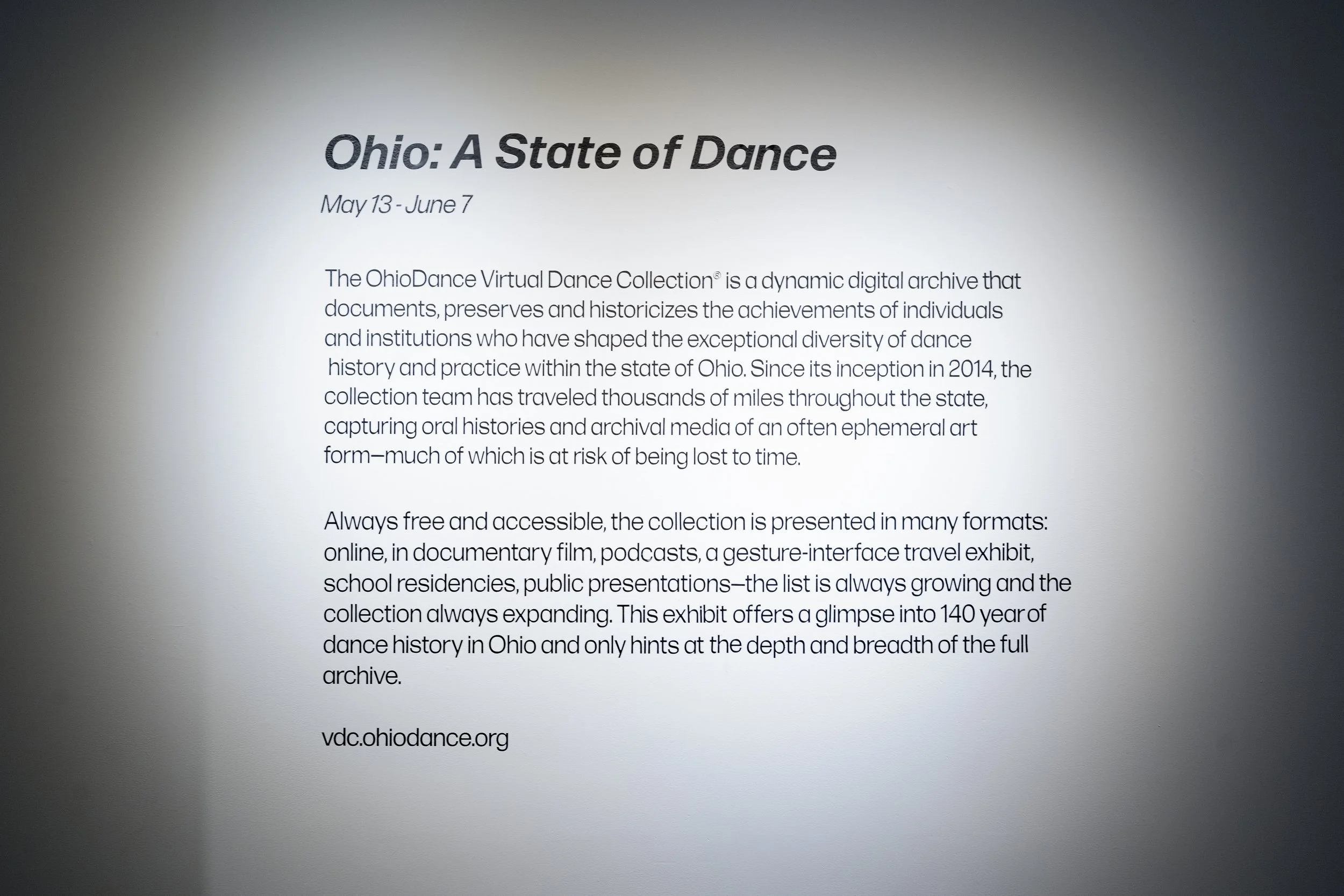
A large-scale, interactive installation that reimagines dance historiography through spatial media, embodied interaction, and public-facing archival research.
Urban Arts Space, Columbus, Ohio
May 13 - June 7, 2025
projections, gesture-based interaction, applied design, photographs, live performances, presentations, and podcast recording
role: concept, design, curation, technical direction
walk-though of the gallery spaces, prior to opening
Practice as Research
Ohio: A State of Dance is a large-scale, interactive gallery installation that investigates how dance history can be experienced as embodied, spatial, and participatory knowledge rather than as static archival record. The core research inquiry asks: How can movement-based archives be reactivated through spatial media and embodied interaction to produce public-facing dance historiography that is experiential, accessible, and pedagogically meaningful?
The project approaches dance history as a form of living, relational knowledge. Rather than presenting archival materials as fixed documents, the installation situates historical content within architectural-scale media environments that require audiences to move, navigate, and interact. This reframes historiography as an embodied process, where meaning is generated through physical orientation, spatial proximity, and user-directed exploration.
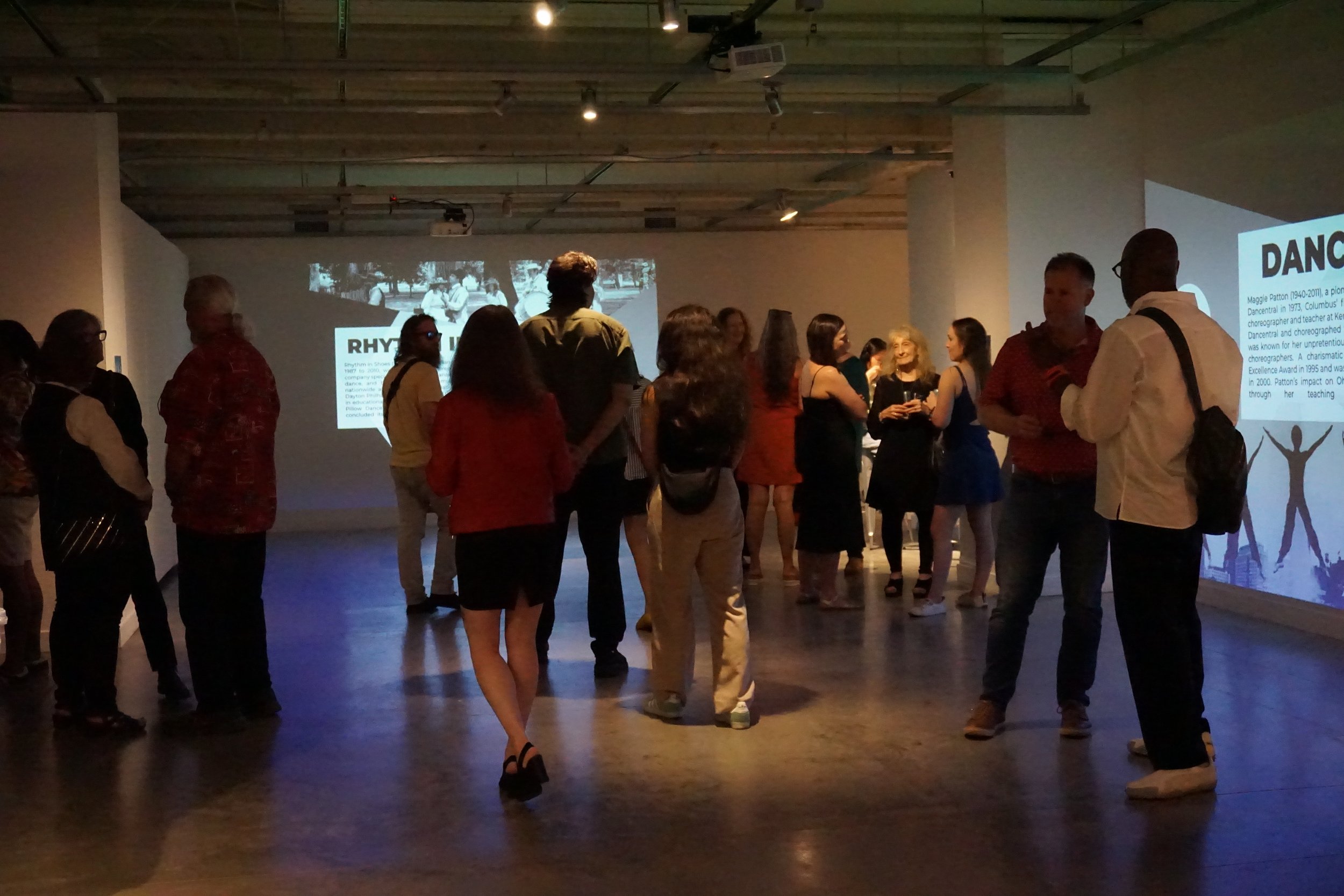
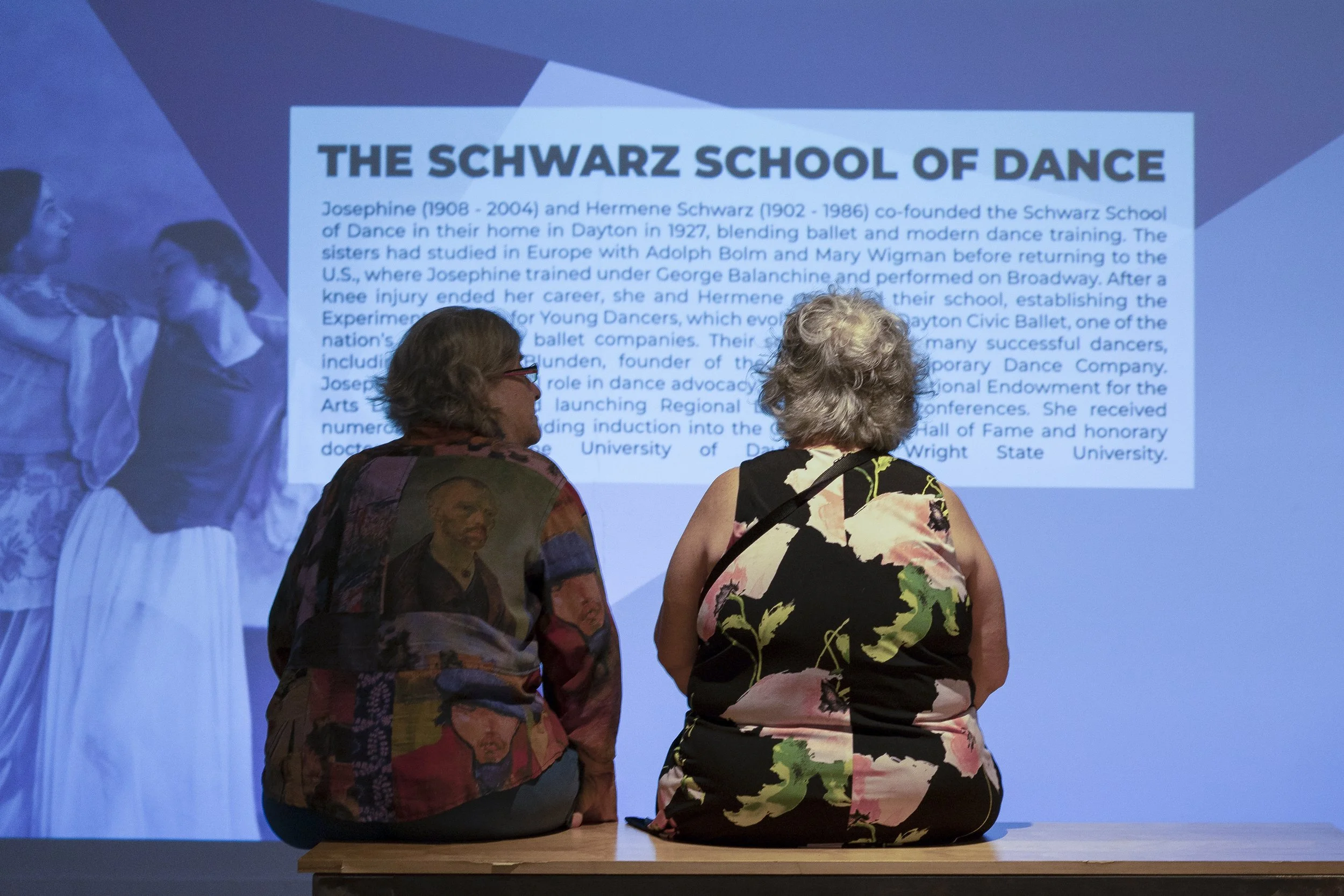
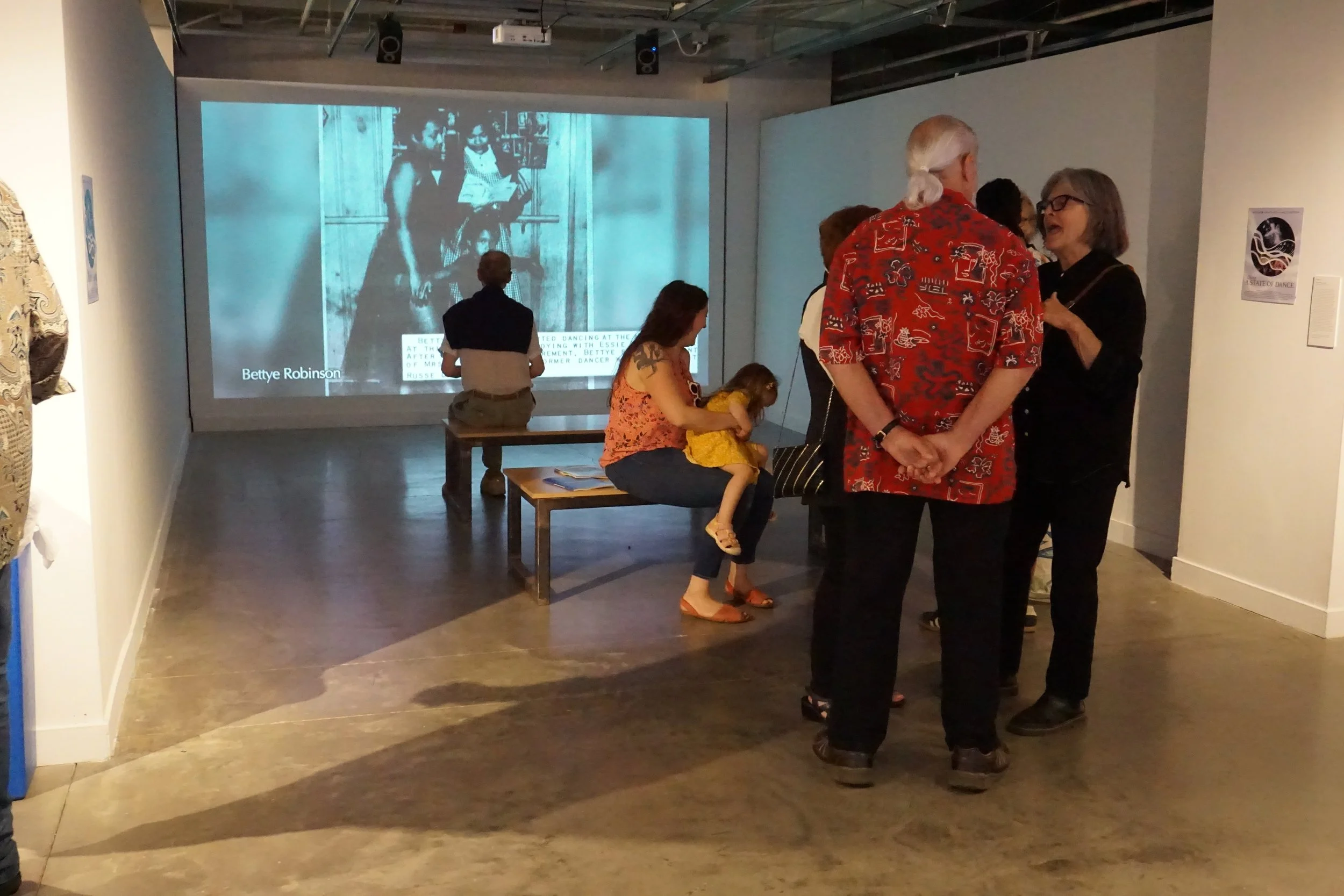
Methodologically, the work combines archival curation, interactive media design, and systems-based installation practice. Archival images, oral histories, and documentary footage from the Virtual Dance Collection® were curated and translated into multiple media formats, including wall-scale projections, an interpretive timeline, and a gesture-controlled interactive interface. A custom mid-air gesture system enabled visitors to navigate the full archive through bodily movement, foregrounding kinesthetic interaction as a mode of research engagement. The installation also integrated a looping documentary projection, curated audio content, live podcast production, and live performance events, positioning discourse and performance as active components of the research environment.
The outcomes of the project operate across public scholarship, pedagogy, and performance. Audiences engaged with dance history through sustained, self-directed interaction rather than passive viewing, while students and educators used the installation as an entry point for discussions of movement, culture, and media systems. Live performances and conversations activated the space as a site of ongoing knowledge production, demonstrating how archival research can be dynamically integrated with contemporary practice.
This research matters to dance and media education because it models a scalable framework for teaching movement history through interactive systems, bridging installation, archival studies, and embodied pedagogy. It demonstrates how media technologies can support critical engagement with dance as cultural knowledge, expanding how dance research is created, shared, and taught within and beyond the academy.
Audience Interaction & Public Engagement
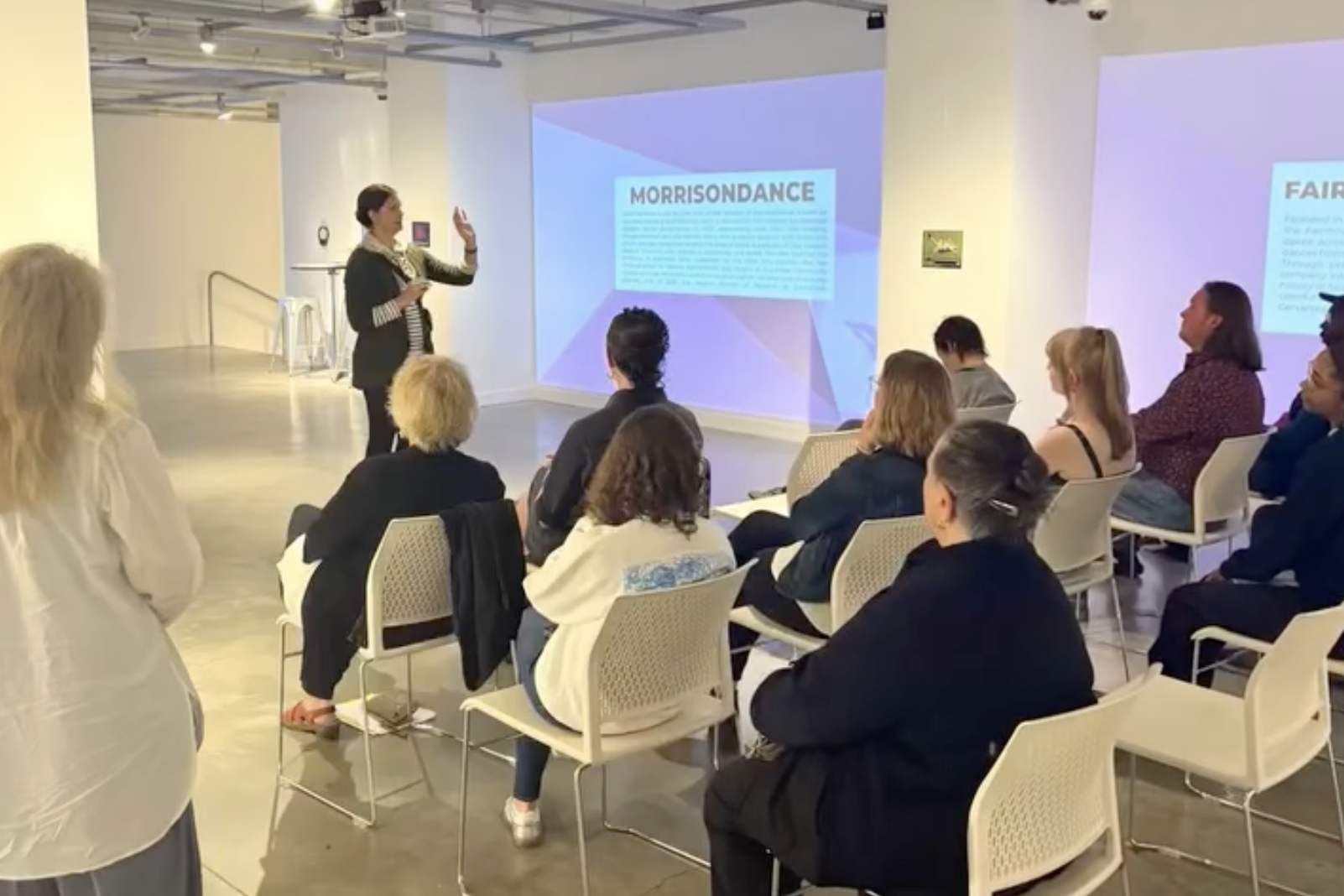
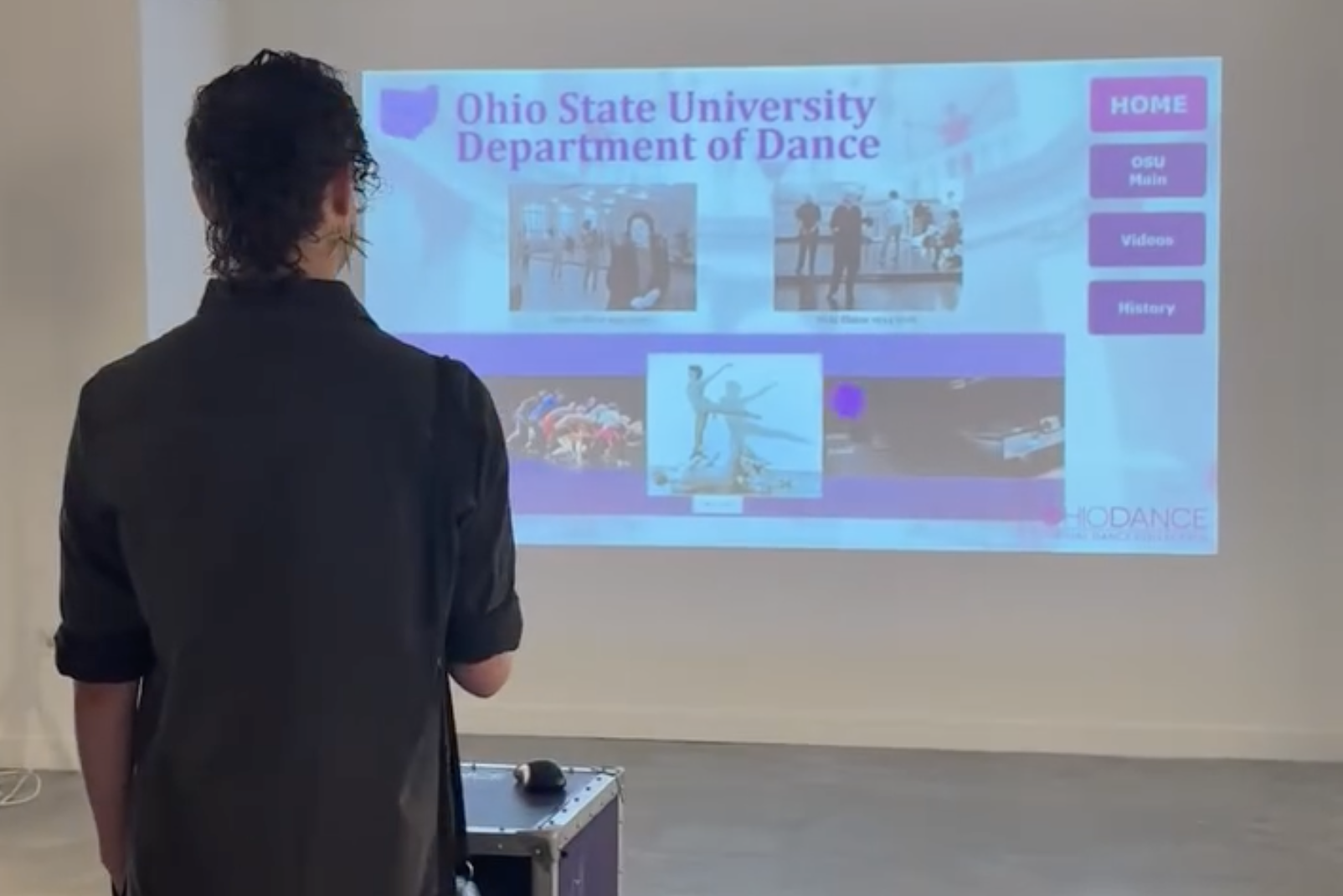
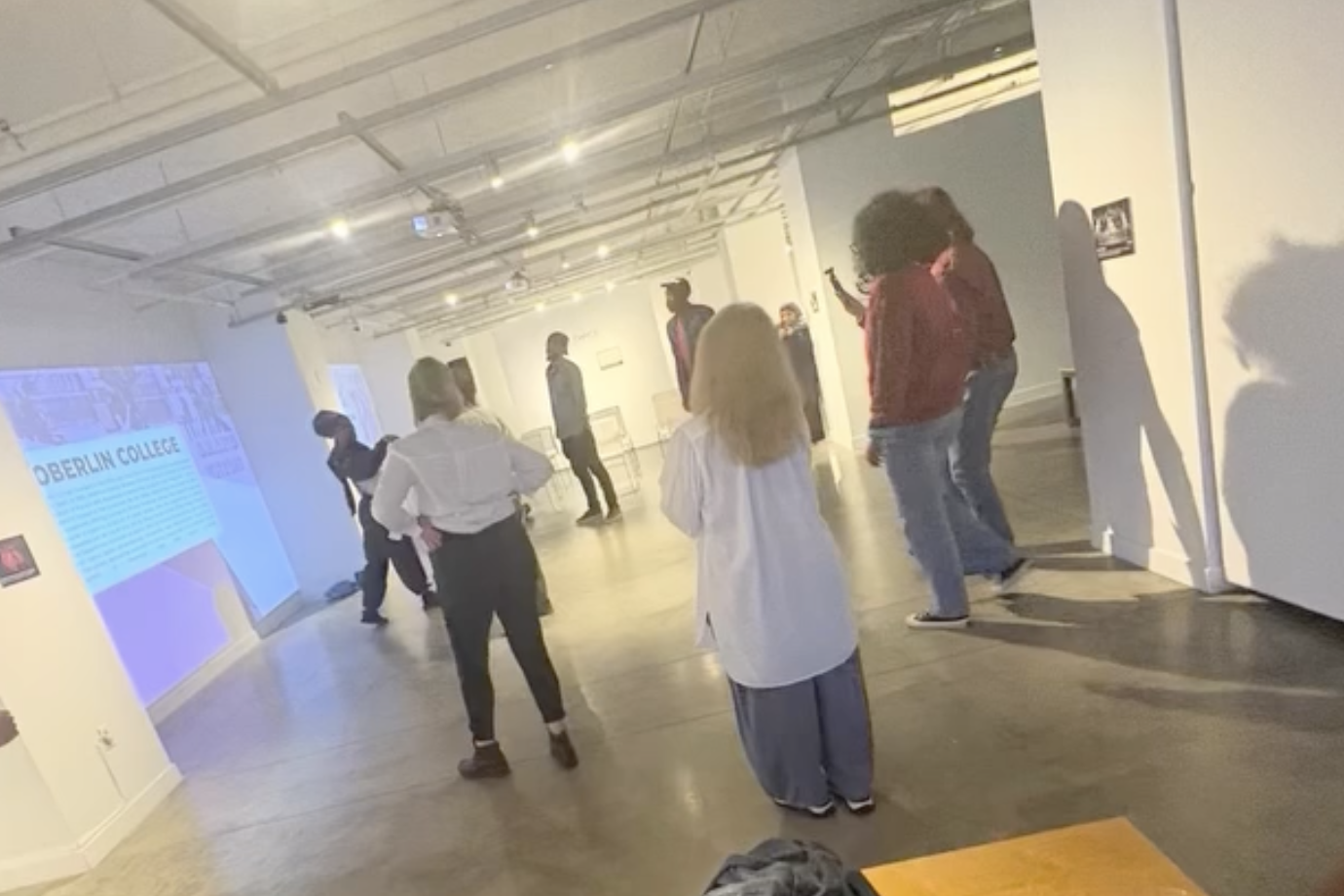
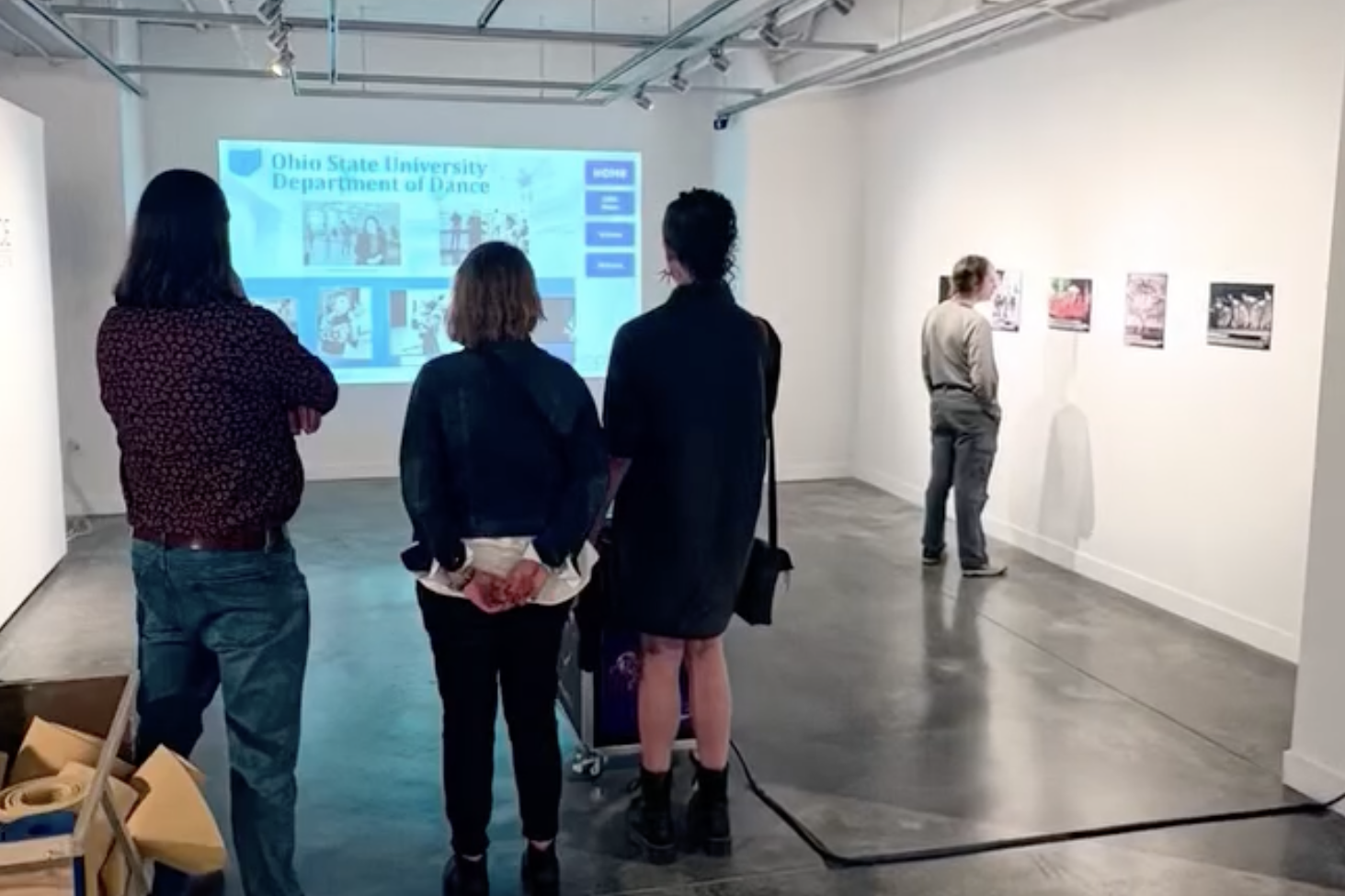
Embodied audience interaction through gesture-based exploration, guided tours, and facilitated dialogue, supporting collective interpretation and pedagogical exchange.
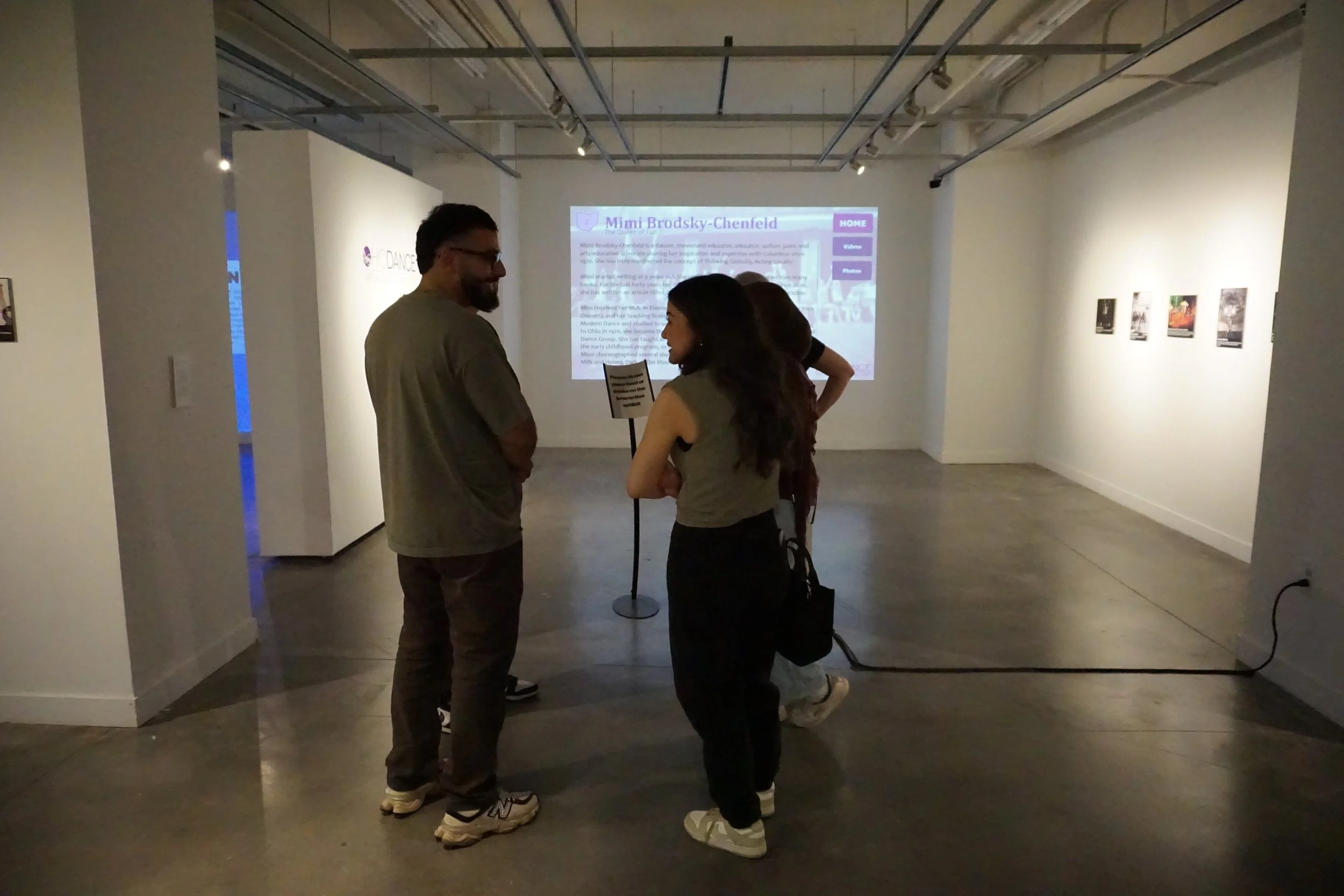
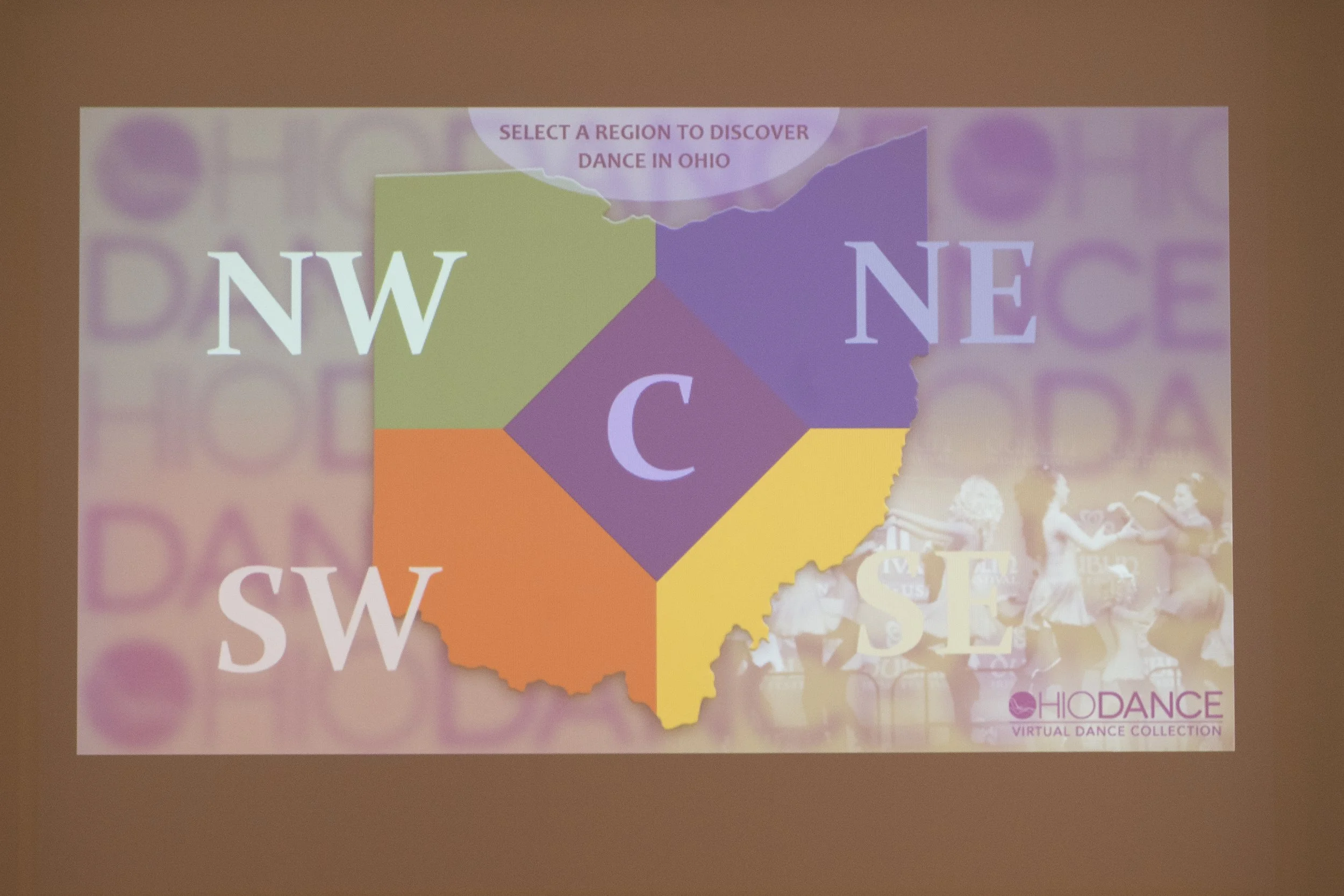
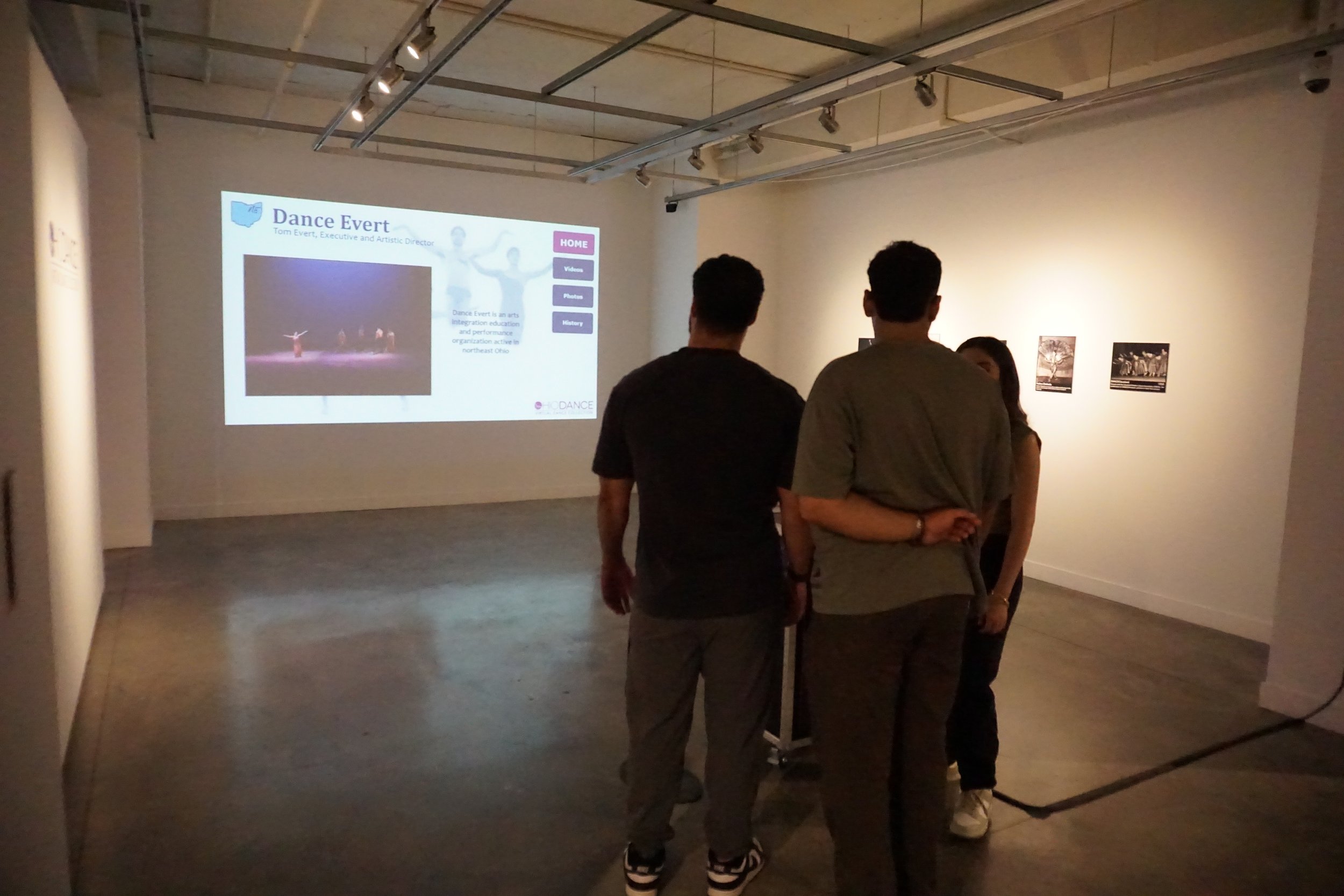
Audience interaction was structured through both self-directed exploration and facilitated engagement. A gesture-controlled interactive exhibit allowed visitors to navigate the Virtual Dance Collection® using mid-air hand movement exploring archival materials in an embodied, non-screen-bound manner. This interaction positioned physical movement as a mode of inquiry, aligning archival research with kinesthetic engagement.
In addition to open public interaction, the exhibition included facilitated talkbacks and guided tours for both public audiences and invited groups. These sessions functioned as dialogic research encounters, enabling collective interpretation of the archival materials, interactive systems, and spatial media. Private group tours such as those conducted for the Destination Arts Integration conference (in collaboration with the Ohio Arts Council, Ohio Alliance for Arts Education, and The Kennedy Center Partners in Education) supported deeper discussion of pedagogical applications, research frameworks, and system design.
Together, these forms of engagement positioned audiences not only as viewers but as active participants in the research process, contributing to an understanding of how interactive, embodied archives function as tools for public scholarship and learning.
Discourse & Scholarship
Live podcast taping embedded within the exhibition as a form of public scholarship and situated research.
The live podcast taping was conceived as an integral component of the exhibition rather than as supplemental programming. Conversation functioned as a form of public scholarship, situating critical reflection, historical context, and curatorial decision-making within the gallery itself.
By embedding scholarly dialogue directly into the exhibition environment, the project foregrounded discourse as an active, participatory mode of knowledge production. The conversation unfolded in the presence of archival media, spatial installations, and audience members, allowing ideas to emerge in direct relationship to the exhibited materials rather than in isolation. This positioned scholarship as responsive and situated, shaped by space, media, and collective engagement.
The podcast format was selected intentionally for its accessibility and longevity. Recording the conversation live enabled the exhibition’s research questions around embodied historiography, archival mediation, and movement-based knowledge to be articulated publicly and preserved as part of the project’s scholarly record. The resulting transcript, video, and podcast extends the exhibition beyond its temporal duration, allowing the research to circulate through educational contexts after the gallery closed.
In this way, discourse was embedded as both method and outcome: a live research activity activating the exhibition space, and a durable artifact contributing to ongoing conversations in dance, media, and public humanities.
Live Performance & Activation
Live performances activated the exhibition as an embodied research space, positioning contemporary movement practices in dialogue with archival and interactive media.
The closing ceremony performances activated the exhibition as a site of live, embodied research, situating contemporary movement practices in direct dialogue with the archival and interactive media surrounding them. By inviting three Ohio-based artists with national and international presence, Mansee Singhi, Quiana Simpson, and Mahana Productions, the project foregrounded continuity between historical dance knowledge and present-day creative practice.
These performances functioned as temporal interventions within the installation, demonstrating how embodied performance can extend historiographic inquiry into the present moment.
Project Components & Systems
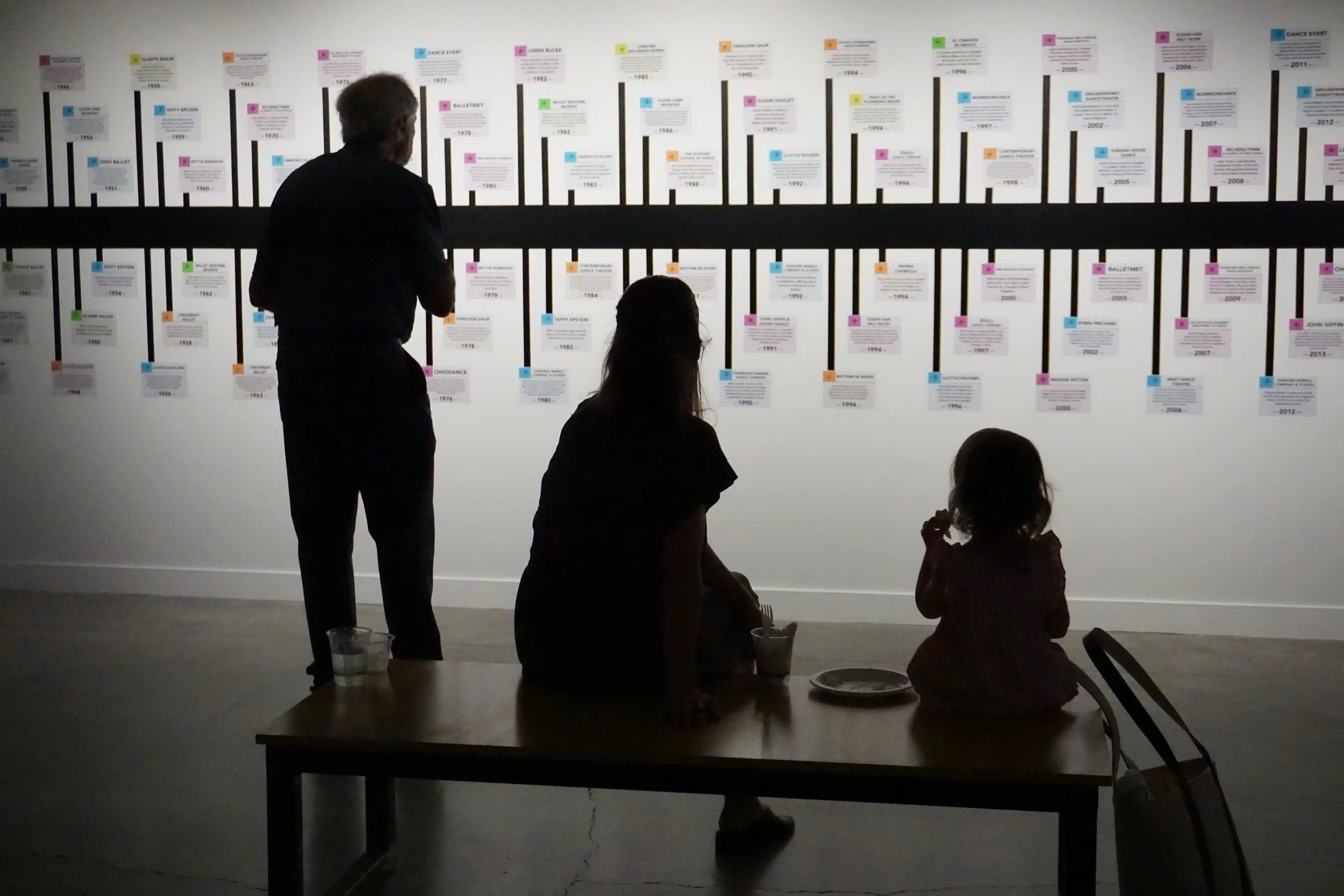
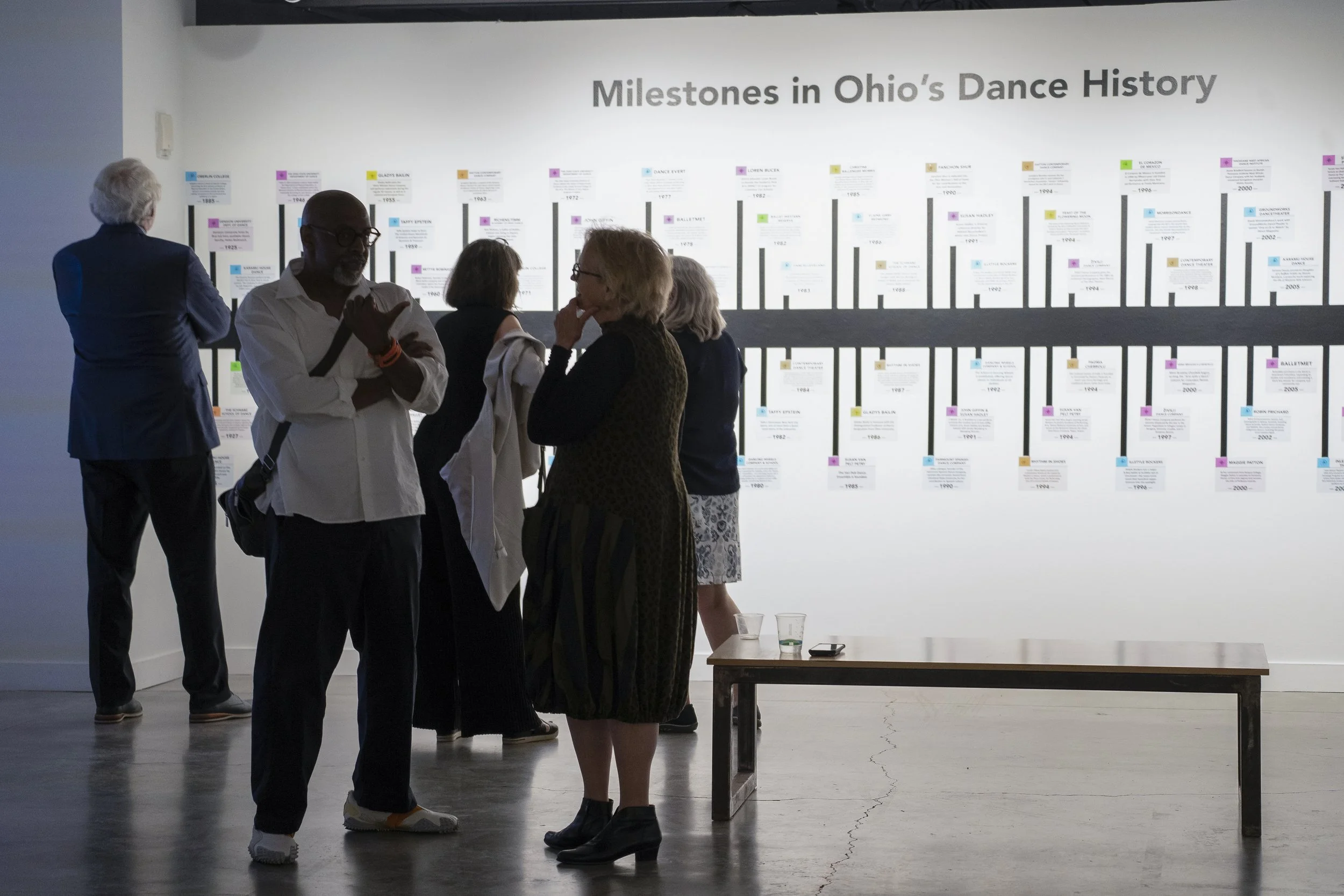
18-foot Timeline Wall
Designed, curated, and installed a full-length interpretive timeline featuring 144 custom vinyl assets, including milestone selection, visual hierarchy, and museum-style application.Archival Image Curation & Display
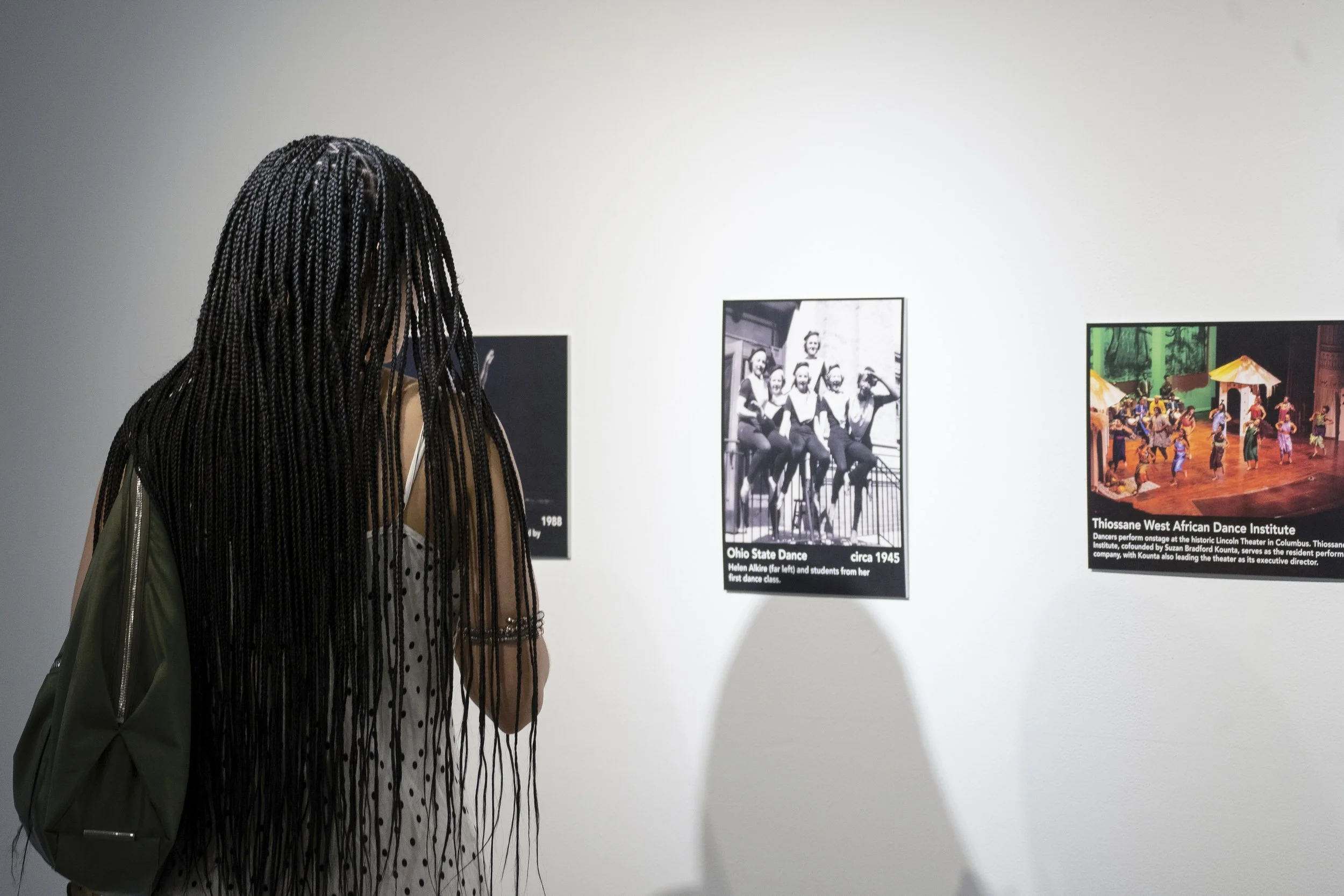
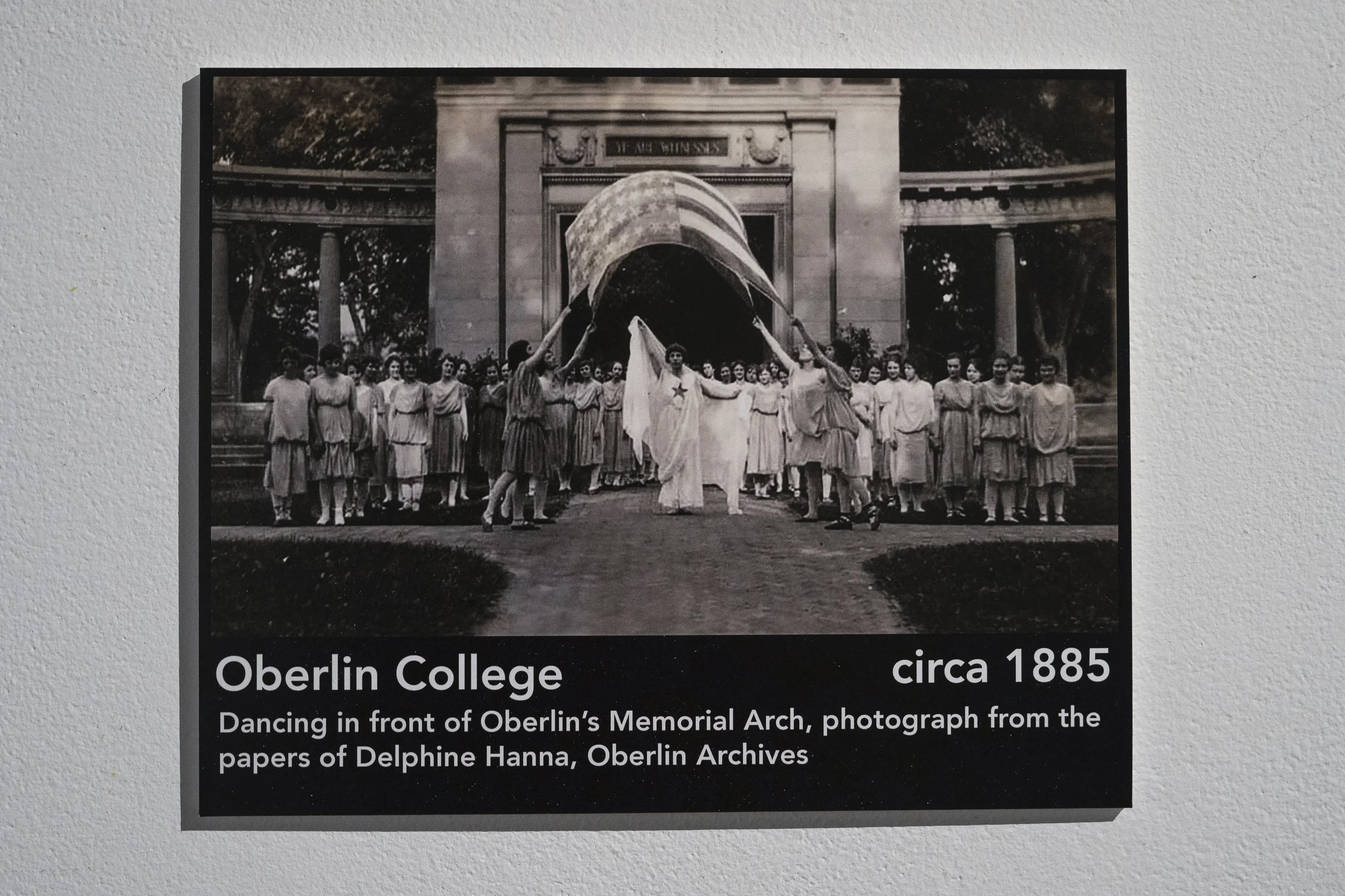
Selected and prepared historical archival images for large-format print and gallery display, integrating visual history into the spatial narrative of the exhibition.Documentary Projection
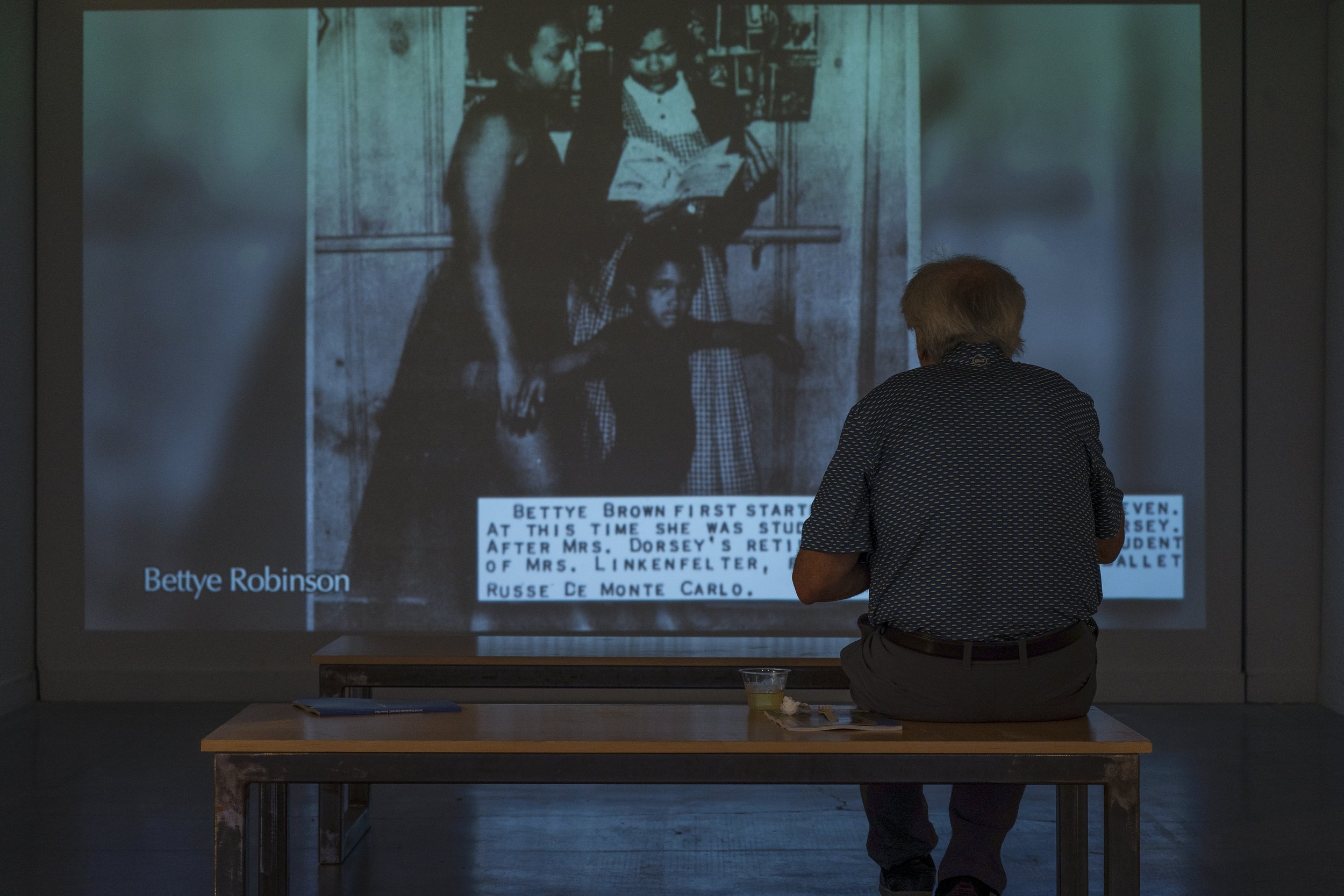
Continuous gallery projection of Ohio: A State of Dance documentary, designed as a looping viewing experience within the exhibition context.Wall-Scale Collection Projections
Designed and executed four 12-foot diagonal projections cycling entry-point narratives for each of the 42 historical profiles in the Virtual Dance Collection®, transforming archival content into immersive, architectural-scale media environments.Gesture-Based Interactive Travel Exhibit
Designed and built the interactive, gesture-controlled archive interface, set in a dedicated projection bay allowing visitors to navigate the full collection through mid-air hand interaction.Podcast Listening Station
Created and installed a listening station featuring curated audio content from the Virtual Dance Collection’s® podcast A State of Dance.Live Podcast Production
Designed, set up, and executed live podcast recording within the gallery space, including video and audio capture, integrating discourse as a live component of the exhibition.Live Performance Documentation
Documented two live performance events activating the exhibition.