#equivogram (2016)
MFA Thesis Project
Interactive installation, responsive media, and live performance
with subsequent web-based trace
Research
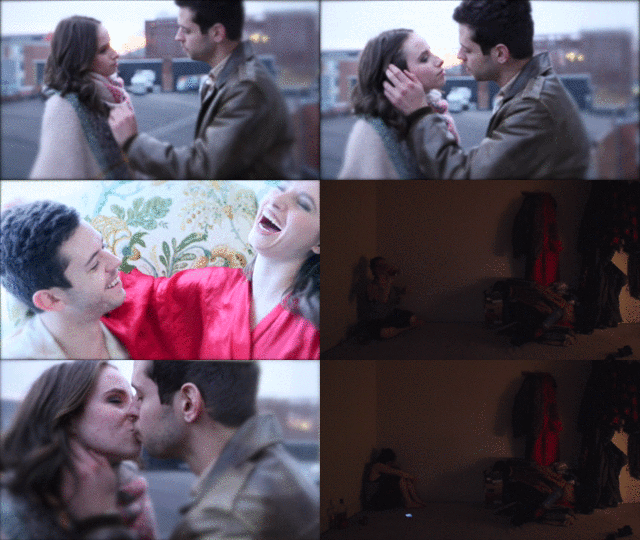
#equivogram is a practice-based research project that investigates how social media image culture shapes embodied self-perception, surveillance, and fragmentation. The work asks: How does the act of curating media identities discipline the lived body, and what forms of exposure, labor, and dissonance remain hidden beneath idealized self-presentation?
Developed prior to the widespread cultural naming of such social persona as “tradwife” or “clean-living” aesthetics and influencer performance, the project examines early manifestations of aspirational, gendered self-curation as a mediated social practice. Rather than analyzing social media representation at the level of image alone, #equivogram situates these dynamics within physical space, using audience proximity, performative labor, and responsive media systems to foreground the embodied costs of constant self-presentation.
The project positions spectators not as passive viewers but as participants whose desire to look, approach, and consume imagery directly activates its collapse.
Methods
The research employs an interdisciplinary, practice-based methodology integrating interactive media systems, performance, and spatial installation.
Responsive Video Installation
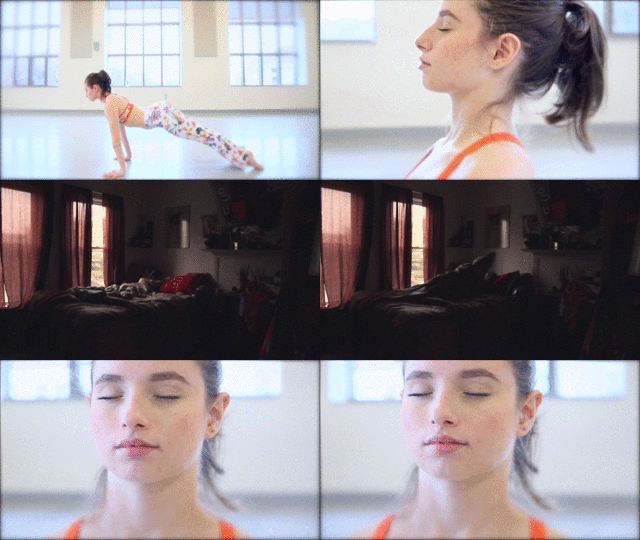
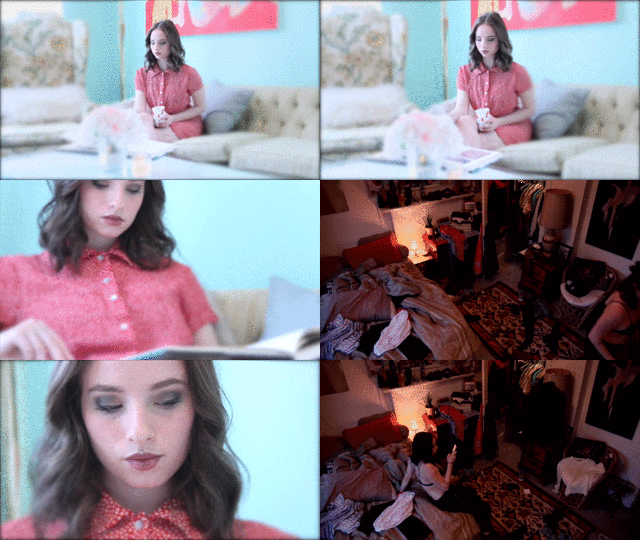
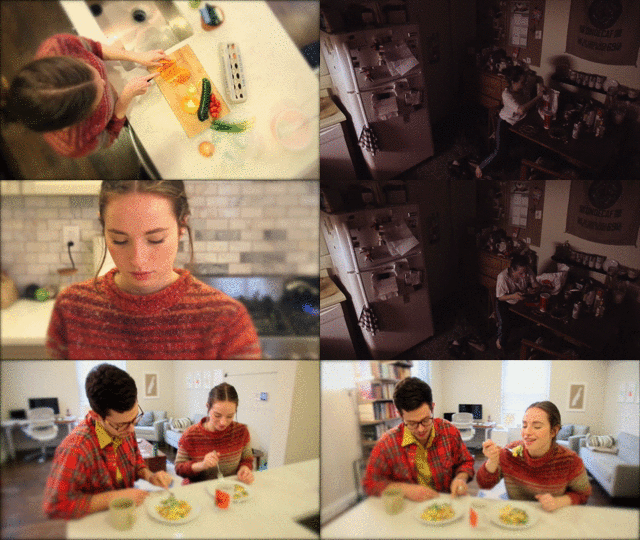
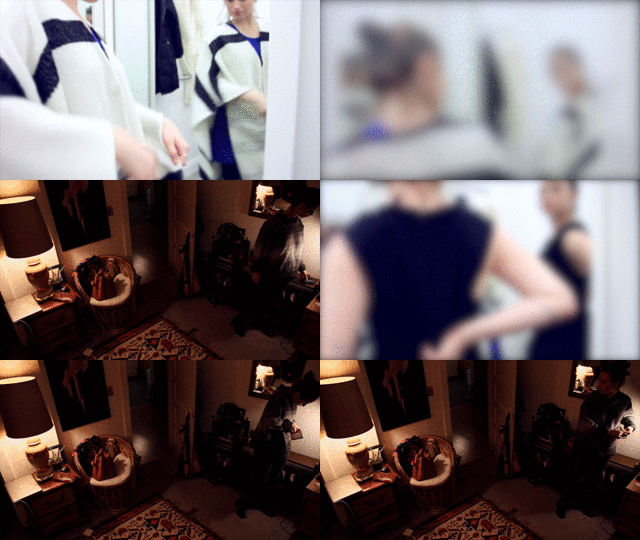
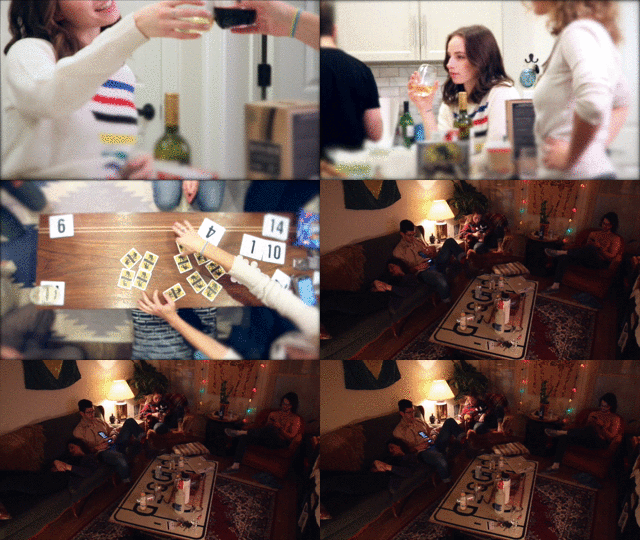
Eight projection-based video vignettes presented idealized, high-production representations of a female subject. Proximity sensing triggered a shift from glossy, aspirational imagery to stark, surveillance-style footage of the same subject, exposing the labor, exhaustion, and contradiction underlying curated self-presentation.
Embodied Interaction as Inquiry
Audience movement and proximity functioned as research variables. The act of approaching the image, motivated by curiosity or desire, instigated its destabilization, implicating spectators in the systems of scrutiny and consumption under examination.
Live Performance Integration
A live performer circulated among gallery attendees, initially performing a polished social persona. Over the duration of the event, this performance unraveled into visible strain and exposure, mirroring the psychological trajectory enacted within the video system.
Temporal Degradation as Structure
The project’s progression over time was integral to its research logic, allowing affective accumulation, fatigue, and behavioral shifts to emerge as part of the inquiry.
Outcomes & Iterations
The initial iteration of #equivogram was presented as an interactive installation with live performance as the culminating MFA thesis evaluation. A subsequent web-based iteration functions as a documentation trace, translating the conceptual inquiry into a non-interactive, reflective format while preserving the project’s core questions around visibility, curation, and fragmentation.
Iteration II: Web-Trace
Social imagery forms an opaque screen—brightly flickering, masterfully selected. We flock to these ecstatic auras like moths, and when we cannot enter into them, we build our own.
To illuminate one moment is to cast others into shadow. Each image lifted from its place leaves behind a recessed context, a divot where it once belonged. As curated moments accumulate into a mountain of gleaming fragments, the shadow grows alongside them—marking a dark, unspoken landscape shaped by absence, neglect, and shame.
What divisions do we impose on our lived bodies when we curate our media bodies? What remains unseen, and at what cost? Is this practice benign self-presentation, or does it quietly discipline us into fragmentation and self-erasure?